Talking Science Podcast
CRISPR – Editing the Code of Life
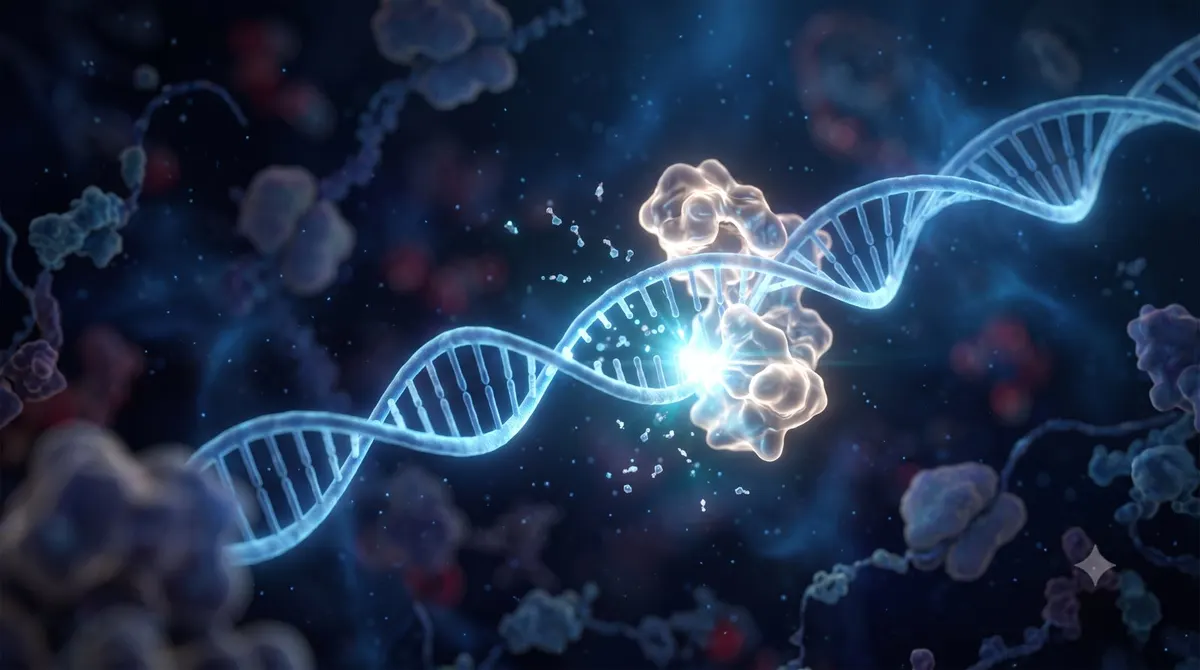
For most of history, the genetic instructions inside living things were something we could read but not rewrite. We could study DNA, compare it, and slowly decode what it meant, yet changing it deliberately and precisely was clumsy, expensive, and unreliable. Then, in the space of a few years, a tool arrived that changed the game entirely. It is called CRISPR, and it lets scientists edit DNA with a precision and ease that once belonged only to science fiction. The most surprising part of the story is where the tool came from: not a laboratory invention, but a defence system that bacteria had been using for billions of years.
A Weapon Borrowed From Bacteria
Bacteria have enemies too. They are constantly attacked by viruses, and over the ages they evolved an ingenious way to fight back. When a bacterium survives a viral attack, it snips out a small piece of the virus’s genetic material and files it away inside its own DNA, like keeping a mugshot of a criminal. The next time that virus appears, the bacterium recognises it from the stored snippet and destroys it before it can do harm.
This filing-and-recognition system is what scientists named CRISPR. The truly useful part is the molecular scissors the bacterium uses to cut the invading virus. This cutting protein, often called Cas9, can be guided to a very specific location and told to slice the DNA precisely there. Researchers realised that if they could control where those scissors cut, they would have a tool for editing genes on purpose.
Scissors With an Address Label
The elegance of CRISPR lies in how it is aimed. The cutting protein does not know on its own where to cut; it is directed by a short guide molecule that carries a genetic address. Because DNA letters pair only in fixed ways, scientists can write a guide that matches any target sequence they choose, and the protein will travel along the DNA until it finds the exact spot that matches, then make its cut.
Think of it as a word processor’s find-and-replace function, but for the genome. You specify the sequence you want to change, the system locates it among billions of letters, and it makes a cut there. Once the DNA is cut, the cell’s own repair machinery springs into action, and scientists can use that moment to disable a faulty gene or to paste in a corrected version. What used to take years of painstaking work can now be done in days, at a tiny fraction of the cost.
Healing Broken Genes
The most hopeful promise of CRISPR is in medicine. Thousands of human diseases are caused by errors in single genes, small typos in the instruction manual that lead to serious illness. In principle, CRISPR offers a way to find those typos and correct them at the source, rather than merely treating the symptoms.
Early results have been genuinely remarkable. Treatments based on CRISPR have already been used to help patients with certain inherited blood disorders, in some cases relieving them of a lifetime of painful episodes and transfusions. Researchers are also exploring its use against inherited forms of blindness, muscle-wasting conditions, and some cancers. Each of these is difficult, and progress is careful and gradual, but the direction is genuinely revolutionary.
Beyond the Clinic
Medicine is only one arena. CRISPR is a general-purpose tool for editing the code of any living thing, and its uses are spreading widely. In agriculture, scientists are editing crops to resist disease, tolerate drought, or stay fresh longer, which could matter greatly as the world tries to feed a growing population under a changing climate.
Some of the applications sound almost fantastical, such as engineering mosquitoes so they can no longer spread malaria, or trying to rescue endangered species. Researchers also use CRISPR simply as a research tool, switching genes on and off to learn what each one does. In this quieter role, it has already accelerated biological discovery across the board.
Still Being Improved
It would be wrong to imagine that CRISPR is a finished, perfect instrument. The early version made a clean cut straight through both strands of the DNA ladder, and while the cell repairs such breaks, the repair is not always tidy, which can introduce unwanted changes. Scientists have been working hard to make the tool gentler and more precise.
Newer approaches can change a single genetic letter without cutting all the way through the DNA, or swap out a short stretch of sequence more cleanly, a bit like using a fine pencil and eraser rather than scissors. Each improvement makes the editing safer and more reliable. This rapid refinement is part of what makes the field so exciting: the tools available today are already noticeably better than those of just a few years ago, and they continue to sharpen.
Power That Demands Care
A tool this powerful naturally raises hard questions, and it would be irresponsible to ignore them. Editing the genes of a patient to cure a disease is one thing. Editing the genes of an embryo, so that the changes are passed down to all future generations, is quite another, because those alterations become a permanent part of the human lineage and affect people who could never consent.
The scientific community has largely agreed that making heritable edits to human beings is not acceptable with our current knowledge, and a case in which this was attempted drew widespread condemnation. There are also practical worries, such as edits accidentally landing in the wrong place. These concerns are exactly why the technology is being developed under careful oversight, with ongoing public debate about where the lines should be drawn.
A New Chapter We Are Only Beginning
It is rare to live through the arrival of a genuinely transformative technology, but CRISPR is one of them. In little more than a decade it has moved from a curiosity of bacterial biology to a tool reshaping medicine, agriculture, and research. The scientists who worked out how to turn a bacterial defence into a precise editing tool were recognised with a Nobel Prize, a fitting acknowledgment of how much they changed. We are still in the earliest pages of this story, learning both what CRISPR can do and how wisely we can choose to use it. The instruction manual of life, once read only, has become something we can carefully begin to rewrite.