Talking Science Podcast
Australia's Unique Wildlife – A Continent of Evolutionary Experiments
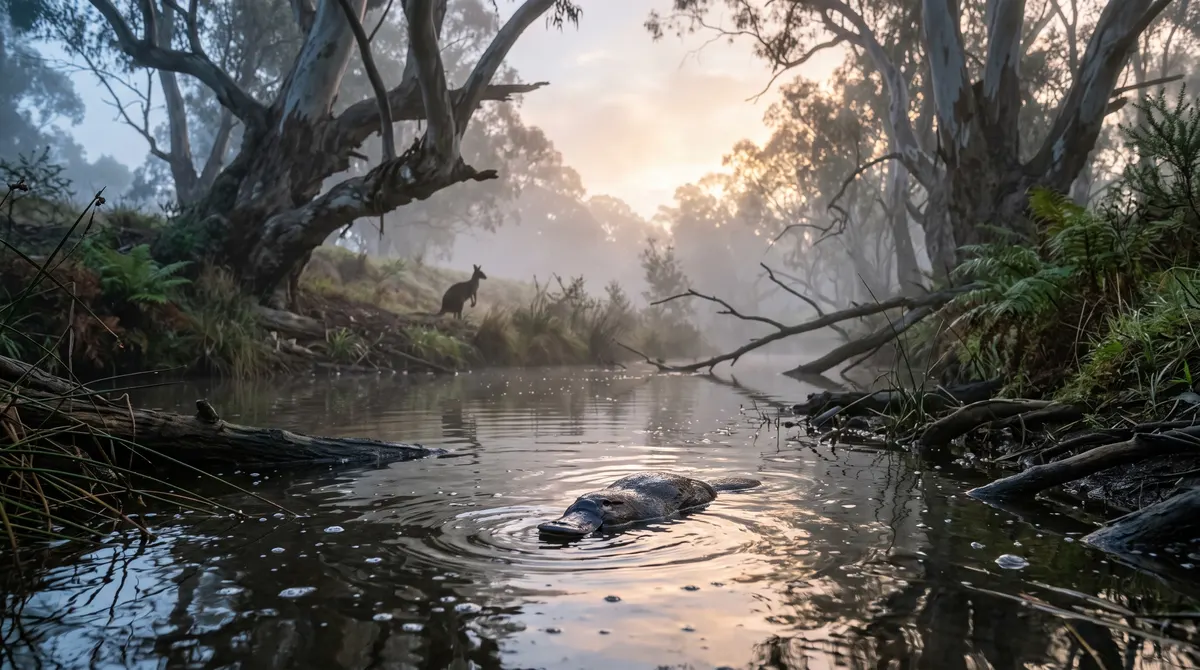
Show a visitor from another planet the animals of just one country and ask them to guess where they had landed, and Australia would give itself away in seconds. A furry animal with a duck-like bill that lays eggs. Another covered in spines that licks up ants. Animals that bound on two legs instead of running, carrying their young in pouches. A so-called bear that is not a bear at all, asleep in a gum tree.
Australian wildlife can feel almost deliberately surprising. It was not designed, of course. It is the product of one of the longest natural experiments on Earth, an experiment that ran in isolation for tens of millions of years and that reveals a great deal about how evolution works.
The Continent That Drifted Away
The master key to the whole story is isolation. Long ago, Australia was part of a great southern supercontinent called Gondwana, joined to Antarctica, South America, Africa, India and other landmasses. The slow movement of Earth's tectonic plates, described in Plate Tectonics – The Moving Skin of the Earth, gradually broke Gondwana apart. Australia finally separated from Antarctica tens of millions of years ago and drifted north, ringed by wide oceans.
Once it was cut off, its animals were on their own. They could no longer mix with, compete against or be replaced by the animals evolving on other continents. Whatever was aboard when Australia set sail would evolve in its own direction for an immense span of time. The continent became, in effect, a separate evolutionary laboratory.
Three Ways to Be a Mammal
To see why Australia is so special, it helps to know that living mammals come in three broad groups. Most mammals today, including humans, are placentals: the young grow inside the mother for a long time, nourished through a placenta, and are born fairly well developed.
The marsupials do things differently. Their young are born extremely early, tiny and undeveloped, and usually finish growing attached to a teat, often inside a pouch. Kangaroos, wallabies, koalas, wombats, possums, bilbies and the Tasmanian devil are all marsupials. Marsupials do live elsewhere, including the opossums of the Americas, but in isolated Australia they flourished and diversified into an extraordinary range of forms, filling roles that deer, rabbits, cats and wolves fill on other continents.
The Egg-Laying Showstoppers
The third group is the strangest of all: the monotremes, mammals that lay eggs. That sounds like a contradiction, but monotremes are true mammals. They have fur and they feed their young on milk. They belong to a lineage that branched off very early in mammal history and kept the ancient habit of egg-laying.
Only a handful of monotreme species survive, and they are found only in Australia and New Guinea: the platypus and the echidnas. The platypus is a wonderful mosaic. It has a bill like a duck, webbed feet, a broad flat tail, venomous spurs on the hind legs of males, and a bill packed with sensors that detect the tiny electrical signals given off by prey underwater. When the first preserved specimen reached scientists in Britain at the end of the eighteenth century, some suspected a hoax stitched together from different animals. It was entirely real, a living window into an early chapter of mammal evolution.
Why Isolation Breeds Oddities
Isolation produces unusual life for reasons that apply far beyond Australia. When a group of organisms is cut off, the predators and competitors they face are different from those elsewhere, so evolution takes different paths. Traits that might be squeezed out on a crowded continent can persist and even thrive. Over long timescales, isolated populations often head in unexpected directions, and Australia, though a whole continent, behaved in many ways like a giant island.
Isolation also shows off a phenomenon called convergent evolution. Because similar ways of life favour similar body plans, some marsupials came to resemble unrelated placental animals strikingly. There is a marsupial mole that tunnels through desert sand, gliders that sail between trees like flying squirrels, and the thylacine, or Tasmanian tiger, which looked remarkably like a dog. They are not close relatives; evolution simply arrived at similar answers more than once. The theme is explored further in Convergent Evolution – Nature Repeating Itself.
More Than Mammals
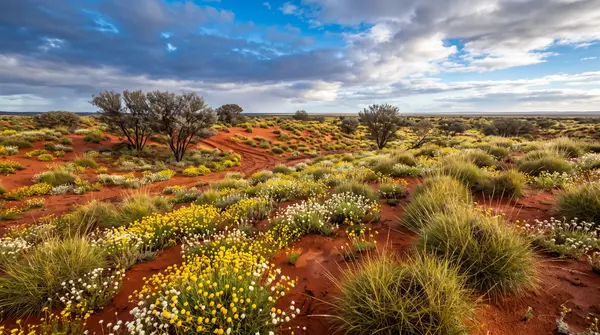
Australia's distinctiveness goes well beyond its mammals. Long isolation combined with often hot, dry and nutrient-poor conditions shaped unusual birds such as the emu, the kookaburra and the lyrebird, an exceptional diversity of reptiles, and plants like the eucalypts and wattles that are finely tuned to drought and fire. What emerges is not a scattering of odd animals but an entire interconnected web of life that evolved together, matched to the particular conditions of this continent.
The Fragile Side of Being Unique
That uniqueness has a sobering flip side. Species that evolved in isolation are often especially vulnerable when the isolation ends. Many Australian animals evolved without foxes, cats or rabbits, so when people introduced them, native species had no evolved defences against the new predators and competitors. Habitat clearing, changed fire patterns and disease have added to the strain.
As a result, Australia has one of the worst records of mammal extinction anywhere in recent centuries, having lost more than thirty native mammal species since European colonisation. The last known thylacine died in a Hobart zoo in 1936. Today, a great deal of Australian conservation work focuses on protecting native species from introduced threats, including fenced and predator-free havens where vulnerable animals such as bilbies and bettongs can recover.
A Living Record of Deep Time
Australia's wildlife is far more than a collection of curiosities for tourist brochures. It is a living record of evolution running its own separate course, a place where egg-laying mammals still survive and pouched animals diversified into a continent's worth of forms. Seen through the lens of continental drift and deep time, these creatures stop looking like random oddities and start looking like what they are: the remarkable, and fragile, results of tens of millions of years of separation. What took that long to create can be lost very quickly, which is exactly why it is worth understanding and protecting.