Talking Science Podcast
Biodiversity and Ecosystems
Walk through a patch of bush, or even a suburban backyard, and it is natural to see it as a collection of separate things. A magpie on the fence, a gum tree, some ants on the path, a spider in the corner of the window. Each one seems to be getting on with its own business, and if one of them disappeared you might not even notice.
That picture misses the most important truth about the living world. Nature is not a catalogue of separate creatures. It is a web of connections, and many of those connections stay invisible until something breaks. Understanding that web, which is what scientists mean when they talk about ecosystems and biodiversity, changes the way you look at a forest, a reef or a garden.
What an Ecosystem Actually Is
An ecosystem is a community of living things in a particular place, all the plants, animals, fungi and microbes, together with the non-living surroundings they rely on: soil, water, air and sunlight. A farm dam is an ecosystem. So is a stretch of Queensland rainforest, a mangrove swamp or an entire river system like the Murray.
The key word is interacting. In an ecosystem the living things are constantly affecting each other and their surroundings, and the whole thing works as a connected unit, a little like the organs of a body. Take one part out and the rest feel it.
From Food Chains to Food Webs
The most basic connection is who eats whom, because that is how energy moves through the system. At school most of us learned this as a food chain: grass is eaten by a rabbit, the rabbit is eaten by a fox. Energy captured from the Sun by the grass passes up the line.
Real life is much messier. The fox does not only eat rabbits, rabbits are not the only animals eating grass, and almost everything is eating, and being eaten by, several other things. The neat chains tangle together into a food web, a dense net of feeding relationships that can link hundreds of species.
Because it is a web rather than a chain, tugging on one strand moves many others. Remove a predator and the animals it used to eat can multiply, overgraze the plants they feed on, and change the vegetation and even the soil. A chain reaction like this, rippling down through the levels of an ecosystem, is called a trophic cascade.
The Wolves That Changed the Rivers
The most famous example comes from Yellowstone National Park in the United States. Wolves had been wiped out there for decades, and without them the elk grew numerous and browsed heavily, especially on young trees along the riverbanks. When wolves were reintroduced in the mid-1990s, the elk were thinned out and pushed around the landscape. Streamside trees began to recover, and with them came birds that nest in them and beavers that feed on them. Beaver dams changed how the streams flowed and created new habitat for fish and frogs.
It is a powerful story, and ecologists are careful to say the real version is more complicated than the popular one. Other factors, including other predators, weather and human hunting, were also at work, and researchers still argue about how much credit the wolves deserve. But the core lesson is well supported: species are linked in ways we often fail to appreciate until one is removed and the consequences spread.
Keystone Species: The Stone That Holds the Arch
In a stone archway, one wedge-shaped block at the very top locks everything in place. It is only one stone among many, but pull it out and the arch collapses. Ecologists borrowed the name for a keystone species, one whose influence on its community is far greater than its numbers would suggest.
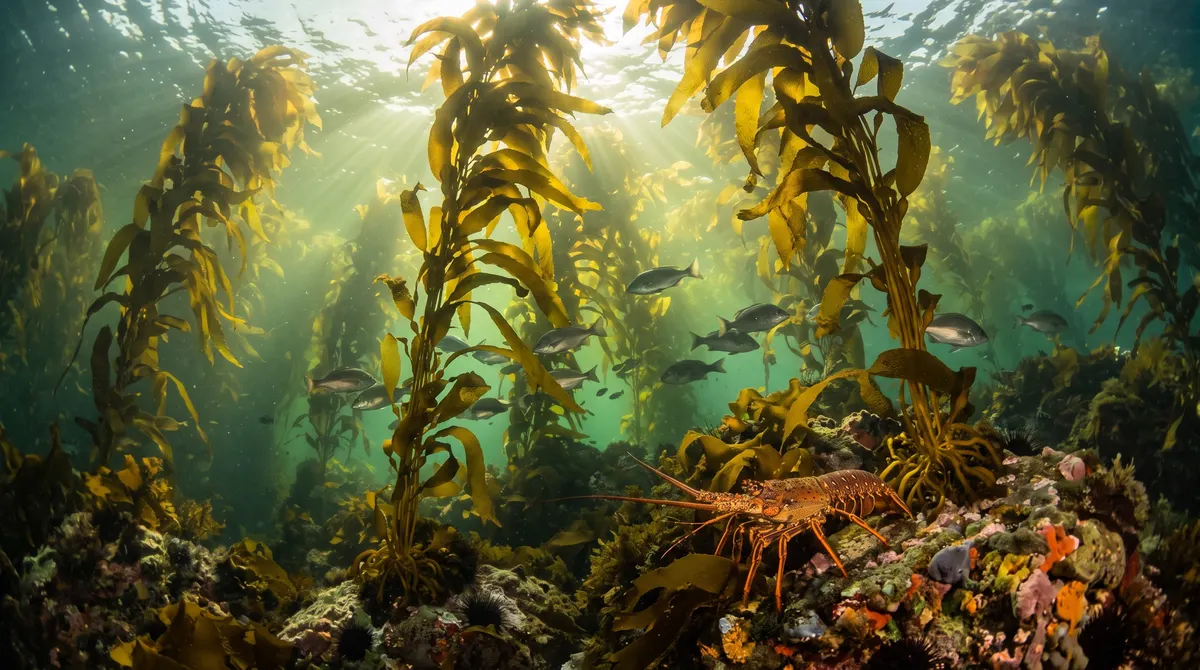
A classic case is the sea otter on the Pacific coast of North America. Otters eat sea urchins, and urchins graze on kelp. Where otters thrive, urchins are kept in check and tall underwater kelp forests shelter a rich community of fish and invertebrates. Where otters vanish, urchins boom and mow the kelp down to bare rock, leaving what divers call an urchin barren.
Australia has its own version of this story. Off eastern Tasmania, warming waters have helped a long-spined sea urchin spread south, and large areas of reef have been grazed into barrens. Big rock lobsters are among the few predators that will tackle these urchins, so fisheries scientists have looked at whether keeping more large lobsters on the reef could help hold the line.
Identifying keystone species matters because protecting the right one can safeguard a whole web of life.
What Biodiversity Really Means
With all that in place, the word biodiversity makes more sense. It is short for biological diversity, and it covers three layers of variety:
- the number of different species in a place
- the genetic variety within each species
- the range of different ecosystems across a region or the whole planet
Australia is one of a small group of countries described as megadiverse, and a large share of its plants and animals live nowhere else. Many of them depend on partnerships of the kind explored in Symbiosis – When Species Depend on Each Other, from plants that need particular pollinators to fungi that feed tree roots underground.
Why Variety Is a Kind of Insurance
A diverse ecosystem, with many species playing many roles, is generally more robust. If one species declines or one link is disrupted, others can often step in and partly fill the gap, and the whole web is more likely to absorb the shock. An ecosystem stripped down to a handful of species is fragile. Cut one strand of a sparse web and the whole thing can unravel.
In that sense biodiversity works like insurance. It helps keep running the services everyone relies on, often without noticing them: clean water, fertile soil, pollinated crops, breathable air and coastlines buffered from storms.
Losing Strands We Did Not Know Mattered
That is why the loss of biodiversity now happening around the world is a practical concern and not only a sad one. Australia has had a particularly hard run, losing more mammal species since European settlement than any other continent, with introduced cats and foxes, land clearing and changed fire patterns among the main causes. The long history of such losses is traced in Extinction – The Five Great Dyings.
When species disappear and ecosystems are simplified, we are not just crossing names off a list. We are cutting strands out of the web, sometimes keystone strands, and we often cannot tell in advance which loss will prove to be the one that matters most.
Nothing Stands Alone
The deep lesson of ecology is both humbling and clear. In the living world nothing exists on its own. Every creature, from a wedge-tailed eagle to the microbes in a handful of soil, is tied into a vast and intricate web. Protecting the richness of that web is not sentimentality. It is how we keep the whole living fabric, our own lives included, from coming apart.