 Talking Science Podcast


Caves and Karst – Landscapes Dissolved by Water
Episode notes
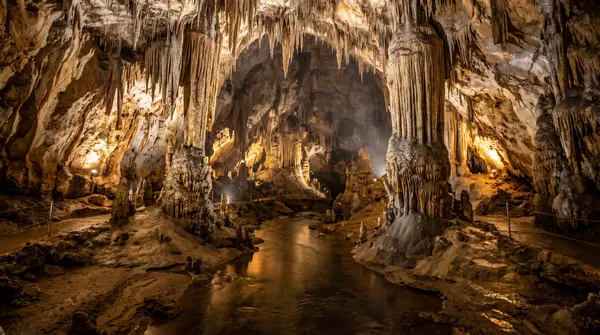
Rain that vanishes into the ground in a limestone landscape isn't just soaking away — it can be dissolving solid rock, one drop at a time. This episode explains the chemistry behind karst landscapes, how caves and their stalactites and stalagmites form over tens of thousands of years, how they preserve a record of past climate, why sinkholes and disappearing rivers occur, the strange eyeless creatures that live in permanent cave darkness, and Australian examples including Jenolan, the Nullarbor and Naracoorte.
You'll come away understanding the carbonic acid chemistry that dissolves limestone, how cave passages grow near the water table over vast timescales, how speleothems record ancient rainfall and temperature, what causes sinkholes and disappearing streams, how troglobitic species adapt to total darkness, and what makes Australia's karst landscapes globally significant.
Further reading: Geoscience Australia – karst and cave landform resources; UNESCO World Heritage – Naracoorte and Riversleigh fossil site listings; Jenolan Caves – official science and geology information; Nature Geoscience – research on speleothems as palaeoclimate archives.