Talking Science Podcast
Epigenetics – Beyond the Genes
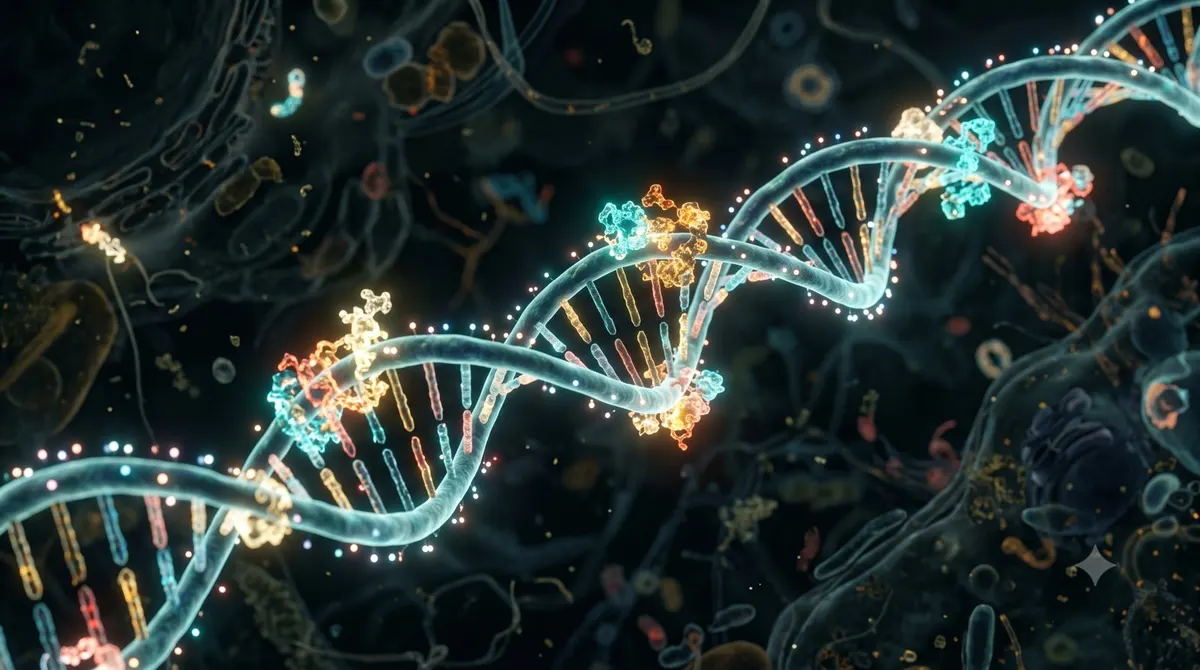
For a long time, we imagined our genes as a fixed script, handed to us at birth and unchangeable, determining everything from our height to our health. The reality turns out to be far richer and more interesting. Sitting on top of your DNA is a whole system of controls that decides which genes are switched on and which stay silent, and this system can respond to your diet, your environment, and your experiences. It is called epigenetics, and it is one of the most fascinating fields in modern biology. The word itself means “above the genes,” and that is exactly where the action is.
The Same Book, Different Readings
Start with a puzzle. Nearly every cell in your body contains the same DNA, the same complete set of genes. Yet a nerve cell and a skin cell could hardly be more different in shape and behaviour. How can identical instructions produce such different results? The answer is that each cell reads only certain parts of the genetic book and keeps the rest closed. A skin cell switches on skin genes and silences the rest; a nerve cell does the opposite. Epigenetics is the system that manages this selective reading, telling each cell which chapters to use.
This is why the metaphor of a script only goes so far. Your genes are more like a vast library, and epigenetics decides which books are pulled off the shelf and which are left untouched. The library does not change, but what gets read makes all the difference.
Chemical Switches and Tags
So how does a cell keep some genes active and others quiet? It uses chemical marks attached to the DNA and to the proteins around which DNA is wound. One common mark involves adding a small chemical tag directly onto a gene, which typically tells the cell to keep that gene switched off. Another involves modifying the spool-like proteins, called histones, that DNA coils around. When the DNA is wound tightly, the genes on it are hidden away and cannot be read. When it loosens, those genes become available.
None of this changes the underlying genetic code itself. The sequence of DNA letters stays exactly the same. What changes is the accessibility, whether a gene is open for business or shut down. Think of it as sticky notes and bookmarks placed throughout a book. The words on the pages are untouched, but the notes guide which passages get attention and which get skipped.
Written by the Environment
What makes epigenetics so compelling is that these marks are not fixed. They can be added or removed over the course of a life, and the environment plays a real part in shaping them. Diet, stress, physical activity, exposure to toxins, and other factors can all influence the pattern of epigenetic marks in your cells. This means your lifestyle and surroundings can affect which of your genes are active, without altering the genes themselves.
One of the most striking illustrations comes from identical twins. They begin life with essentially the same DNA, yet as the years pass they often diverge, developing different health profiles and susceptibilities. Part of the reason is that their epigenetic patterns drift apart, sculpted by their separate diets, habits, and experiences. Their genes stayed the same; the way those genes were read did not.
Memory in Every Cell
Epigenetic marks also give cells a kind of memory. When a cell divides, it can pass its pattern of marks to its daughter cells, so a skin cell reliably produces more skin cells rather than something else entirely. This cellular memory is essential for keeping the body organised. Without it, the careful division of labour among your many cell types would fall apart.
This same mechanism is at work during development. As an embryo grows from a single cell into a complex organism, epigenetic controls guide cells down different paths, locking in their identities step by step. It is a beautifully orchestrated process, and epigenetics is one of the conductors keeping it in time.
Can It Be Inherited?
A tantalising question is whether epigenetic marks can be passed from parents to offspring. In most cases, the slate is largely wiped clean between generations, with marks reset early in development so each new individual starts fresh. However, research in plants and animals suggests that under some circumstances certain marks may carry over, potentially influencing the next generation. This remains an active and carefully studied area, and scientists are appropriately cautious about how far the effects reach in humans. It is a frontier where curiosity runs high and firm conclusions are still being worked out.
Why It Matters
Beyond the sheer wonder of it, epigenetics has real consequences for health and medicine. Faulty epigenetic control is involved in many diseases, including some cancers, where genes that should be active get silenced or genes that should be quiet get switched on. Because epigenetic marks can, in principle, be reversed, they offer promising targets for treatment. A number of medicines already work by adjusting these chemical switches, and research continues to explore what else might be possible.
Epigenetics has quietly transformed how we think about ourselves. We are not simply the sum of the genes we inherited, playing out a predetermined program. We are the product of a dynamic conversation between our DNA and the world we live in, a conversation written in chemical tags that switch our genes on and off throughout our lives. Your genes may be the notes, but epigenetics helps decide the music. It is a reminder that biology is rarely as simple, or as fixed, as it first appears, and that life keeps a good deal of flexibility built right into its foundations.