 Talking Science Podcast
Fossil Fuels – Ancient Sunlight
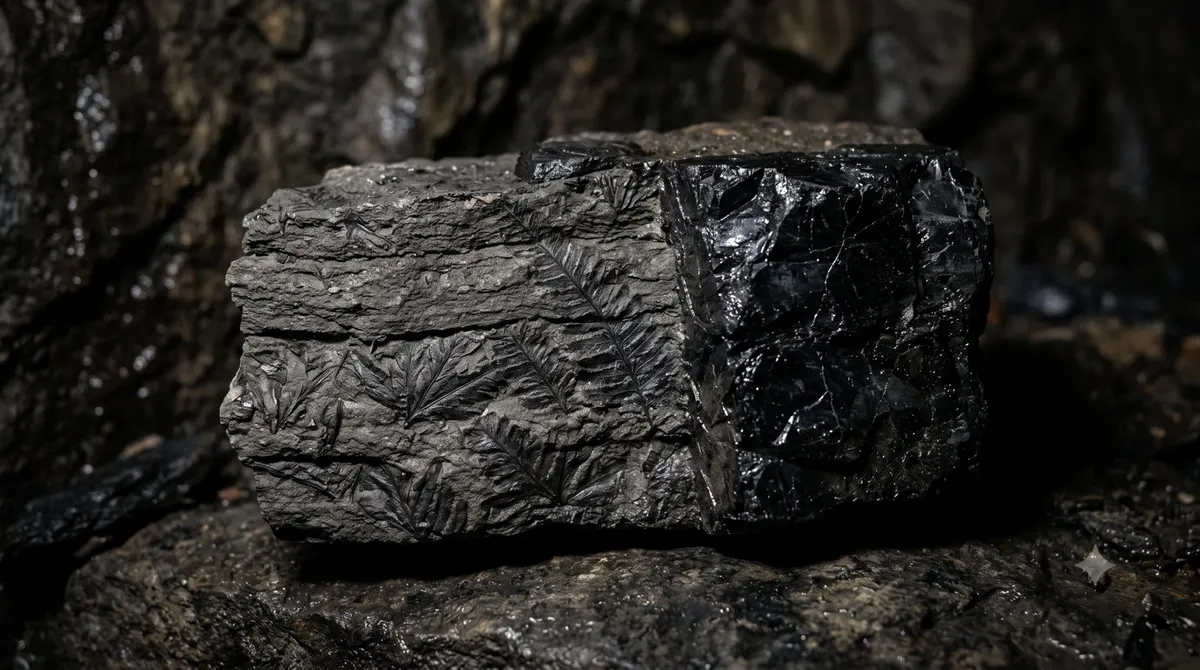
When you fill a car with petrol or switch on a gas stove, you are releasing energy that arrived on Earth as sunlight hundreds of millions of years ago. It sounds like poetry, but it is plain physics. Coal, oil, and natural gas are, in a very real sense, ancient sunshine, captured by living things in a world we would barely recognise and locked underground ever since. Understanding how that happened, and what it means to burn it all in a couple of centuries, is one of the most important stories in Earth science.
Sunlight Into Life
The story begins, as so many do, with photosynthesis. Plants, algae, and certain bacteria have a remarkable talent: they take sunlight, water, and carbon dioxide from the air and weave them into sugars, storing the sun’s energy in chemical bonds. That energy is what powers nearly all life on Earth. When you eat a piece of bread, you are running on captured sunlight only a season old. Fossil fuels are the same idea, but the sunlight is unimaginably older.
Long ago, vast numbers of plants and microscopic ocean organisms lived, grew using sunlight, and died. Normally, when living things die, decomposers break them down and their stored carbon returns to the air. But sometimes the dead material was buried before it could fully rot, and that interruption is where fossil fuels are born.
How Coal Was Made
Coal comes mostly from land plants. During a period of Earth’s history often called the Carboniferous, roughly 300 to 360 million years ago, huge swampy forests covered much of the land. Giant ferns and tree-like plants grew, died, and toppled into waterlogged swamps where there was little oxygen. Without oxygen, the usual decomposers could not do their work, so the plant matter piled up as thick, spongy peat instead of rotting away.
Over enormous spans of time, layers of sediment buried that peat deeper and deeper. The weight squeezed out the water, and the heat of the Earth’s interior slowly cooked what remained, driving off other elements and concentrating the carbon. Peat became soft brown coal, and with more time, pressure, and heat, it hardened into the dense black coal we dig up today. Each lump is a compressed slab of ancient forest.
Oil and Gas from the Sea
Oil and natural gas have a different origin, mostly out at sea. In ancient oceans, the surface waters teemed with plankton, tiny drifting plants and animals. When they died, their remains rained down and settled into the mud on the seafloor. In places where oxygen was scarce, this organic-rich mud was buried under more and more sediment.
Down in the depths, heat and pressure transformed the buried remains. At certain temperatures the organic matter turned into liquid oil; hotter still, and it became natural gas, which is mostly methane. Being lighter than the surrounding rock and water, these fluids tended to seep upward through porous rock until they hit a layer they could not pass. There they pooled, trapped, and waited, sometimes for a hundred million years, until a drill found them.
Why We Call Them Energy-Dense
Fossil fuels became the engine of the modern world for a simple reason: they pack a lot of energy into a small, portable, storable package. All that geological squeezing and cooking concentrated the sun’s energy into something you can carry in a tank or shovel into a furnace. A single barrel of oil holds a startling amount of work, which is why they transformed transport, industry, and daily life so completely.
That convenience is also the trap. Because they are so energy-dense and, until recently, so cheap and abundant, we built almost our entire civilisation around them. Untangling that dependence is difficult precisely because these fuels served us so well.
The Carbon Catch
Here is the crux of the matter. When those ancient plants and plankton pulled carbon dioxide out of the air to grow, they effectively removed carbon from the atmosphere and locked it underground. It stayed there, out of circulation, for hundreds of millions of years. Burning fossil fuels reverses that in an instant of geological time. Combustion combines the stored carbon with oxygen and releases it back into the air as carbon dioxide.
Carbon dioxide is a greenhouse gas, meaning it traps heat that would otherwise escape to space, keeping the planet warmer than it would otherwise be. A certain amount of this effect is natural and welcome; without any greenhouse gases, Earth would be a frozen ball. The problem is speed and scale. By digging up and burning in a few centuries what took hundreds of millions of years to form, we are adding carbon to the atmosphere far faster than natural processes can absorb it, and the planet is warming as a result.
A Finite Inheritance
There is one more thing worth sitting with. Fossil fuels are, for all practical purposes, a one-time inheritance. The specific conditions that made them, the right organisms, the burial before decay, the exact heat and pressure over millions of years, are not being repeated on any timescale that matters to us. What we have is what there is. We are spending a savings account that took the planet an unfathomably long time to build.
It is worth pausing on just how vast that timescale is. The forests that became coal grew and died over tens of millions of years. The plankton that became oil settled to the seafloor across similar stretches of deep time. What we are burning in the space of a few human lifetimes represents the patient work of geological ages. No factory could reproduce it, because the essential ingredient is time on a scale we can barely imagine, applied to organisms that captured sunlight in a world long gone.
None of this makes fossil fuels villains in a simple morality tale. They lifted billions of people out of hardship and built the world we live in. But it does reframe them. They are not just fuel; they are buried sunlight, a finite gift from a vanished world, and burning them has consequences that ripple through the climate. Seen that way, the case for using that inheritance wisely, and for learning to run more directly on today’s sunshine, feels less like a slogan and more like plain common sense.


