Talking Science Podcast
Nuclear Power – Splitting the Atom
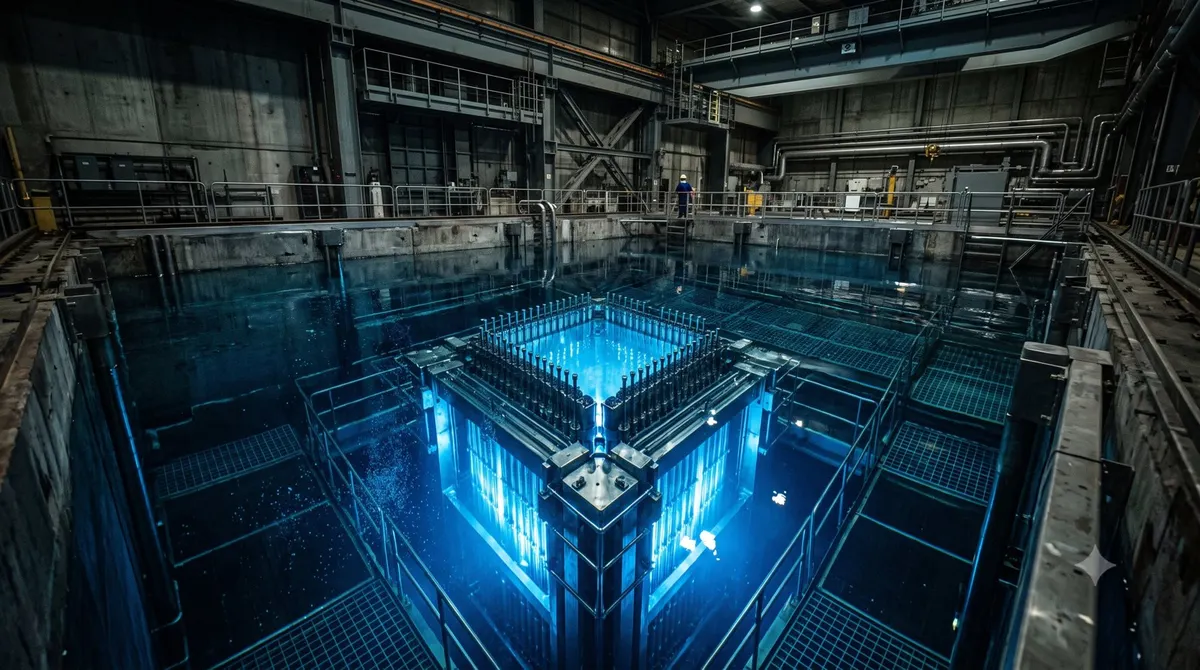
Deep inside a nuclear power station, something almost unbelievable is happening. Atoms too small to see are being split in two, and each tiny split releases a burst of energy. Gather enough of these splits, keep them going in a controlled chain, and you can boil water, spin turbines, and light up a city – all from a fuel pellet smaller than your fingertip. Nuclear power is one of humanity’s most concentrated sources of energy, and also one of its most debated. To understand both the promise and the worry, we need to look inside the atom itself.
The Energy Locked in the Nucleus
At the centre of every atom sits a tiny, dense core called the nucleus, made of particles packed tightly together. Holding that core together takes an enormous amount of energy, far more than the energy binding the outer electrons that ordinary chemistry deals with. Burning coal or wood rearranges electrons and releases a modest amount of energy. Tapping the nucleus releases something on an entirely different scale.
This is the crucial difference between nuclear power and every fire humans lit before it. A chemical fire nibbles at the edges of atoms. Nuclear power reaches into their very hearts. That is why a small amount of nuclear fuel can release as much energy as a mountain of coal. The energy was always there, locked inside the nucleus; splitting the atom is how we let it out.
Splitting Atoms and the Chain Reaction
The process at the core of a nuclear plant is called fission, which simply means splitting. The fuel is usually a particular form of uranium, a heavy element whose large nucleus is relatively easy to break apart. When a stray subatomic particle called a neutron strikes a uranium nucleus, the nucleus wobbles and splits into two smaller pieces, releasing energy – and, importantly, releasing a few more neutrons in the process.
Those freed neutrons can go on to strike other uranium nuclei, splitting them too and releasing yet more neutrons. One split triggers several more, which trigger several more again. This is a chain reaction, and left unchecked it would run away with itself. The genius of a nuclear reactor is keeping this chain reaction steady – fast enough to produce useful heat, but never so fast that it spirals out of control.
From Split Atoms to Electricity
It is easy to imagine a nuclear plant as some exotic machine, but the last steps are surprisingly old-fashioned. All that energy from the splitting atoms does one basic thing: it produces heat. And a nuclear plant uses that heat in the same way a coal plant does. It boils water into steam, the steam rushes through a turbine and spins it, and the spinning turbine drives a generator that produces electricity.
In other words, the exotic part is the fuel. Everything downstream is steam and spinning metal, a technology as old as the industrial age. To keep the chain reaction under control, engineers insert rods made of materials that soak up spare neutrons. Push these control rods in and they absorb neutrons, slowing the reaction; pull them out and the reaction speeds up. By adjusting them, operators hold the reactor at exactly the pace they want, like managing a fire by controlling its air supply.
The Great Advantages
Nuclear power has some genuinely remarkable strengths. Chief among them is that splitting atoms produces no carbon dioxide, the gas driving climate change. A nuclear plant running at full tilt emits no smoke from its fuel, which makes it attractive to countries trying to cut their carbon emissions while still keeping the lights on around the clock.
It is also astonishingly compact. Because nuclear fuel carries so much energy in so little mass, a single plant on a modest patch of land can power a large city continuously, day and night, in fair weather or foul. Unlike some energy sources, it does not pause when the sun sets or the wind drops. For steady, large-scale, low-carbon power, few things match it.
The Serious Worries
If nuclear power were purely an advantage, every country would run on it. It is not, and the drawbacks are real. The first is waste. The split fuel left over from a reactor is radioactive, meaning it gives off harmful, invisible radiation, and some of it stays dangerous for a very long time. Storing this waste safely, out of harm’s way for generations, is a genuine and unresolved challenge.
The second is the fear of accidents. When a reactor is well run, it is safe, but the handful of serious accidents in nuclear history have left deep scars in public memory. A loss of control can release radiation into the surrounding area, forcing people from their homes. These events have been rare, but their consequences are frightening enough that they shape how many people feel about the whole technology. Building nuclear plants is also slow and expensive, which adds a practical brake alongside the emotional one.
Scientists have long dreamed of a cleaner cousin of today’s reactors. Instead of splitting heavy atoms apart, this approach would join light atoms together, the very same process that powers the Sun. Called fusion, it promises abundant energy with far less long-lived waste and no risk of a runaway chain reaction. The trouble is that forcing atoms to fuse requires conditions as extreme as the heart of a star, and taming those conditions on Earth has proven fiendishly difficult. Fusion remains a work in progress, a tantalising possibility rather than a working power source, but researchers around the world continue to chase it.
So nuclear power sits at a crossroads of hope and caution. It offers vast amounts of steady, carbon-free energy from a fuel of extraordinary density – a genuine tool against climate change. Yet it carries the burden of long-lived waste and the shadow of rare but serious accidents. Whether the world leans into nuclear power or away from it is one of the defining energy questions of our age. What is beyond doubt is the sheer wonder of the underlying idea: that we learned to split the atom, and to harness the energy that had been locked inside it since the universe began.