 Talking Science Podcast
Ocean Currents and the Global Conveyor Belt
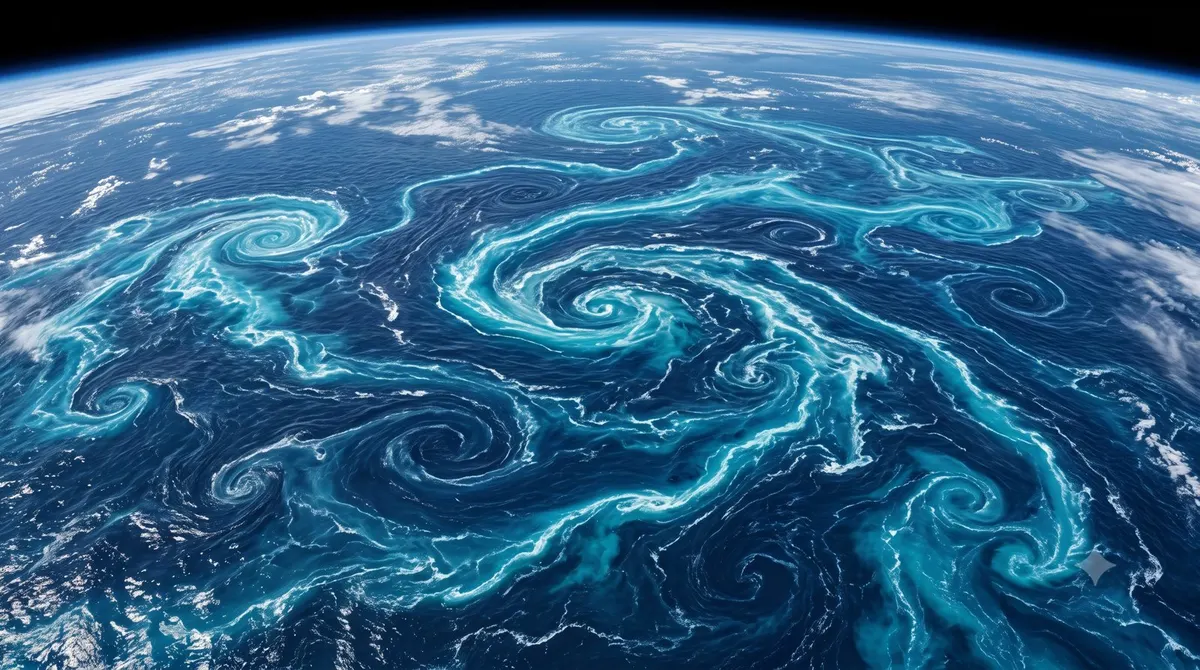
Stand at the edge of the sea and it can look like the water is just sloshing back and forth, going nowhere in particular. But the ocean is one of the most restless engines on the planet. Beneath the waves, enormous rivers of water are on the move, carrying heat from the tropics toward the poles and cold water back again in a journey that can take a thousand years to complete. This great circulation, sometimes called the global conveyor belt, is a quiet giant that helps decide what the weather is like in places thousands of kilometres from the sea.
Two Kinds of Currents
Ocean currents come in two broad flavours, and it helps to keep them apart. The first are surface currents, driven mainly by the wind. As steady winds blow across the ocean, they drag the top layer of water along with them, setting up great looping flows across each ocean basin. These are the currents that carry warm tropical water toward higher latitudes and are strong enough to affect the climate of entire coastlines.
The second kind runs deep and is driven not by wind but by differences in the water itself, in its temperature and its saltiness. Together these two properties control how dense, or heavy, a parcel of seawater is, and density is what powers the deep half of the conveyor belt. Scientists call this deep circulation the thermohaline circulation, from the Greek words for heat and salt.
What Makes Water Sink
To understand the conveyor belt, you have to understand why some seawater sinks. Two things make a parcel of water denser and therefore more likely to plunge downward. Cold water is denser than warm water, and saltier water is denser than fresher water. When both happen at once, the effect is powerful.
Something like this occurs in the cold seas near the poles, particularly in the North Atlantic. Warm surface water arriving from the tropics gradually gives up its heat to the frigid air and cools dramatically. On top of that, when sea ice forms, it leaves most of its salt behind in the water below, making the remaining water saltier still. Cold and salty, this water becomes dense enough to sink, plunging into the deep ocean and beginning a long, slow journey along the seafloor.
The Belt in Motion
Picture the whole thing as a single connected loop, even though the reality is more tangled. Warm, salty surface water travels toward the North Atlantic, cools, sinks, and heads south through the deep Atlantic. It flows down around the tip of Africa and joins a broad current circling Antarctica, then branches into the Indian and Pacific Oceans. In these regions the deep water gradually warms and rises back toward the surface, then makes the long return trip near the top, eventually feeding warm water back toward the Atlantic to begin again.
The scale is hard to grasp. A single drop of water might take somewhere on the order of a thousand years to complete the full circuit. It is the slowest of journeys, but the volume of water on the move is staggering, and that is what makes the conveyor belt matter so much.
Moving Heat Around the World
The reason all this shapes our lives is that moving water means moving heat. Water is remarkably good at storing warmth, and the ocean holds a vast amount of the sun’s energy. As currents carry warm water away from the equator, they redistribute that heat toward colder parts of the world, gently evening out temperatures that would otherwise be far more extreme.
The classic example is the warm current that carries tropical water toward the North Atlantic. It helps keep parts of western Europe noticeably milder than other places at the same latitude. Regions that sit as far north as chilly parts of Canada enjoy comparatively gentle winters, in part because the ocean is delivering a steady supply of warmth to the air above it. Currents also influence where rain falls, where fish gather, and how storms behave.
Life and the Deep Return
The conveyor belt does more than move heat. As deep water rises back toward the surface in certain regions, it brings up nutrients that have accumulated in the depths, the leftovers of life that sank from above over long ages. These nutrient-rich upwellings fertilise the sunlit surface waters, triggering blooms of tiny plant-like plankton that form the base of the ocean food web. Many of the world’s richest fishing grounds sit where deep water wells up.
The circulation also helps the ocean absorb carbon dioxide from the atmosphere and carry it into the deep, where it can stay for a very long time. In this way the conveyor belt is woven into the planet’s climate not just through heat but through the great cycling of carbon and life.
A System Worth Watching
Because the deep circulation depends so delicately on temperature and saltiness, it is sensitive to change. As the planet warms, polar ice melts and adds fresh water to the seas near the poles. Fresher water is less dense and less inclined to sink, which could slow the crucial plunging of water in the North Atlantic. Scientists watch this circulation closely, because a significant slowdown could shift weather patterns across whole continents.
It is worth appreciating just how tightly the ocean and the atmosphere are linked. The air and the sea are not two separate systems but partners in a single climate machine, constantly exchanging heat, moisture, and gases across the water’s surface. Winds drive the currents, and the currents in turn warm or cool the air above them, which shapes the winds. Change one part of this partnership and the effects ripple outward, sometimes to places far from the sea.
What strikes me most about the global conveyor belt is how something so slow and hidden can matter so much. We rarely think about the deep ocean, yet its patient churning helps set the temperature of our cities, feeds the fisheries that feed us, and buffers the swings of climate. The next time you watch waves roll onto a beach, it is worth remembering that beneath them lies a planetary circulation, moving ancient water and precious heat around the world one slow drop at a time.


