Talking Science Podcast
Photosynthesis – How Plants Eat Sunlight
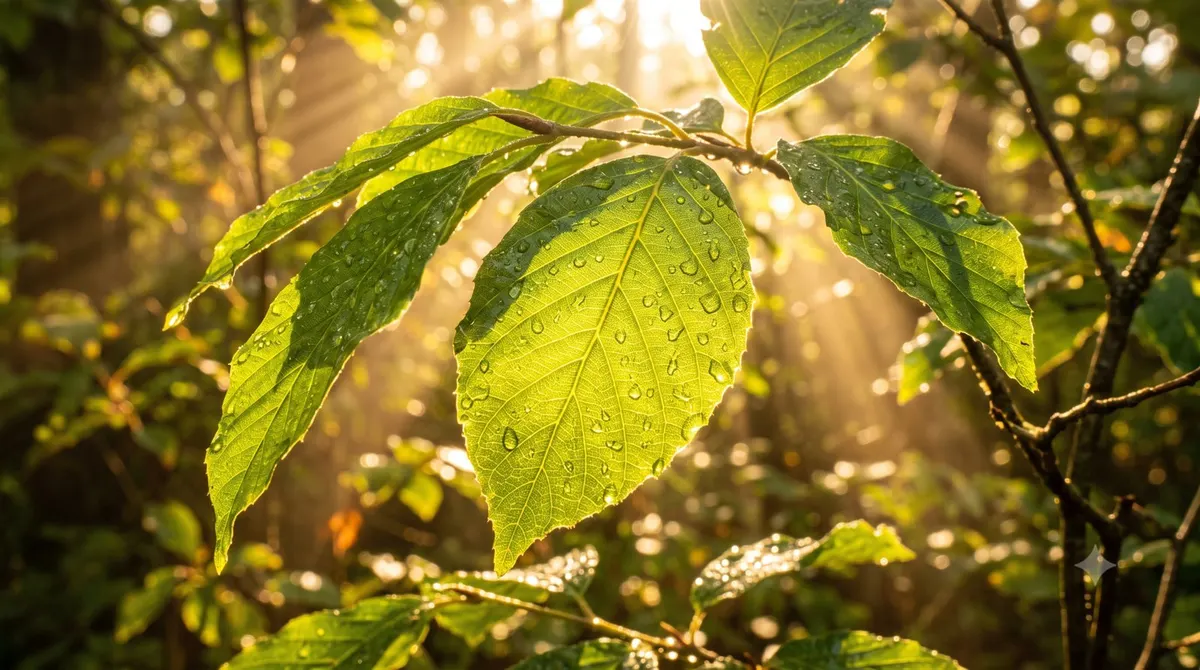
Step outside on a bright day and look at any green leaf. It seems to be doing nothing at all, just sitting there in the sun. In truth it is running one of the most important chemical processes on the planet, and doing it silently, without moving a muscle. That leaf is capturing energy from sunlight and using it to build food out of thin air and water. The process is called photosynthesis, and nearly every meal you have ever eaten, and nearly every breath you have ever taken, depends on it. Plants, in a very real sense, eat sunlight, and in doing so they feed almost all the rest of us too.
The Recipe Plants Follow
At its heart, photosynthesis is a way of turning simple, low-energy ingredients into a rich, energy-packed one. Plants take in carbon dioxide, a gas that makes up a small part of the air, through tiny pores in their leaves. They draw up water from the soil through their roots. And they capture energy from sunlight. From these humble starting materials they manufacture sugar, which stores energy in a form the plant can use, and they release oxygen as a by-product.
The by-product is worth pausing on. The oxygen that plants breathe out is not an accident to them, but it is life itself to us. Almost all the oxygen in the air we breathe was put there by photosynthesis, produced by plants, algae, and certain bacteria over billions of years. Every breath you take is a gift from something green.
The Green Machinery
The reason leaves are green points straight to how photosynthesis works. Inside plant cells are tiny structures packed with a pigment called chlorophyll, and chlorophyll is superb at absorbing light. It soaks up the red and blue parts of sunlight and uses that energy to drive the chemistry, while reflecting the green light it cannot use. That reflected green is exactly what reaches your eyes, which is why the living world looks the colour it does.
Chlorophyll sits inside miniature energy factories called chloroplasts. A single leaf cell may contain dozens of them, and each one is a bustling site of activity when the sun is up. These chloroplasts are the actual location where sunlight is captured and converted, the engine rooms hidden inside every blade of grass and every tree.
Two Stages of the Process
Photosynthesis unfolds in two connected stages. In the first stage, sunlight strikes the chlorophyll and its energy is captured. This captured energy is used to split water molecules apart, which is the step that releases oxygen into the air, and it charges up energy-carrying molecules that the plant will use in the next stage.
In the second stage, the plant uses that stored energy to grab carbon dioxide from the air and assemble its carbon atoms into sugar. This part does not need light directly; it runs on the energy captured earlier. The beauty of the arrangement is that the plant essentially builds solid food, and its own physical body, largely out of an invisible gas, powered entirely by sunshine.
Building a Body From Air
Here is a fact that surprises almost everyone. When a tiny seed grows into a towering tree weighing many tonnes, most of that added weight does not come from the soil. It comes from the air. The carbon that makes up the wood, the leaves, and the branches was pulled out of carbon dioxide gas through photosynthesis, one molecule at a time.
It sounds almost unbelievable that a solid trunk could be built largely from a gas, yet that is exactly what happens. The plant captures carbon dioxide, strips out the carbon, and locks it into sugars that it then rearranges into the sturdy materials of its body. In this way, forests act as vast stores of carbon, quietly holding onto material that was once floating in the atmosphere.
A Partner in the Climate Story
This carbon-capturing habit gives photosynthesis a starring role in one of the great issues of our age. Carbon dioxide is a heat-trapping gas, and human activity has been adding a great deal of it to the atmosphere by burning fuels. Plants, algae, and other photosynthetic life act as a natural counterweight, pulling some of that carbon dioxide back out of the air and storing it in their tissues and in the soil.
This is a large part of why forests and oceans matter so much to the planet’s health. The tiny drifting algae of the sea, though individually invisible, carry out an enormous share of the world’s photosynthesis and help regulate the whole atmosphere. When forests are cut down or oceans are disturbed, this natural balancing service is weakened. The humble chemistry inside a leaf, multiplied across the globe, turns out to be one of Earth’s most important life-support systems.
The Foundation of Nearly Every Food Chain
Because plants can make their own food from sunlight, they sit at the base of almost every food chain on Earth. Consider what this means:
- A rabbit eating grass is really consuming captured sunlight stored as sugar
- A fox eating the rabbit is eating that same energy passed one link along
- Even the food on your own plate traces back, directly or indirectly, to photosynthesis
Organisms that make their own food this way are the producers, and everything else ultimately depends on them. Without the steady work of photosynthesis, the flow of energy that sustains animals, fungi, and most other life would simply stop. It is the great engine that draws energy from the sun and pushes it into the living world.
A Quiet Miracle Worth Noticing
There is something humbling about realising that so much depends on a process we almost never think about. Every green leaf is a solar panel, a chemical factory, and a food source all at once, and together they clothe the planet in green and fill the air with breathable oxygen. Photosynthesis has been running for billions of years, long before there were any animals to benefit from it, patiently transforming sunlight into the substance of life. The next time you pass a garden or walk beneath a tree, it is worth remembering that all around you, silently and ceaselessly, the world is eating sunlight.