 Talking Science Podcast
Soil – The Thin Layer That Feeds Us
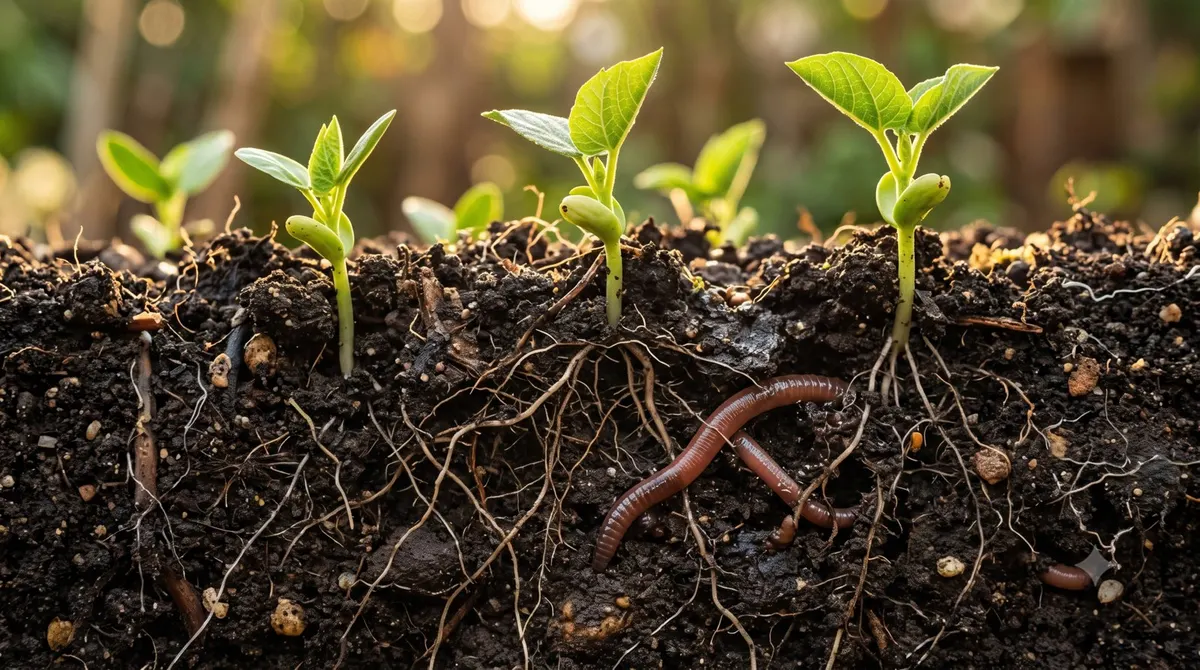
Kneel down in a garden, scoop up a handful of dark earth, and you are holding one of the most quietly astonishing substances on the planet. It looks like plain dirt. It is anything but. That handful contains more living organisms than there are people on Earth, and it took centuries, sometimes millennia, to make. Almost everything we eat traces back to this thin, fragile layer draped over the continents. Yet most of us never give it a second thought.
What Soil Actually Is
We tend to use the words “dirt” and “soil” as if they mean the same thing, but they do not. Dirt is what ends up under your fingernails. Soil is a living system. It is a mixture of four main ingredients: broken-down rock particles, decayed plant and animal matter, water, and air. Get the proportions right and you have something that can hold water like a sponge, feed a plant, and breathe.
The mineral part comes from rock that has been ground down over long stretches of time by frost, rain, roots, and chemistry. The living part, called organic matter, comes from things that were once alive and are now decomposing. This dark, crumbly material is often called humus, and it is the secret to a soil’s fertility. It stores nutrients, helps the soil hold moisture, and gives it that rich, earthy smell after rain.
A Recipe That Takes Centuries
Here is the humbling part: soil forms extraordinarily slowly. In many places it takes hundreds of years for nature to build a single centimetre of new topsoil, the precious upper layer where most plant roots live. Weathering breaks the parent rock into finer and finer grains, while plants, fungi, and bacteria add organic material from above and within. Over time the material sorts itself into rough layers, or horizons, from dark, rich topsoil down through paler subsoil to the broken rock below.
Because soil forms so slowly, it behaves for human purposes like a non-renewable resource. When it washes or blows away, we cannot simply make more within a lifetime. That mismatch, slow to build and quick to lose, sits at the heart of why soil deserves our attention.
The Hidden City Underfoot
If you could shrink down and wander through a teaspoon of healthy soil, you would find a teeming metropolis. Billions of bacteria, threads of fungi stretching like underground cables, protozoa, microscopic worms, and countless insects all going about their business. This underground community is not just along for the ride. It is doing essential work.
Fungi in particular form remarkable partnerships with plant roots. Their fine threads, called mycorrhizae, extend far beyond what roots can reach, hunting for water and nutrients and delivering them to the plant. In return, the plant shares some of the sugar it makes through photosynthesis. Bacteria, meanwhile, perform chemical feats such as pulling nitrogen from the air and converting it into a form plants can use. Earthworms tunnel through, mixing and aerating the soil and leaving behind nutrient-rich castings. Together these organisms recycle dead material back into the nutrients that new life depends on.
Why It Feeds Us
The link between soil and dinner is more direct than most people realise. The overwhelming majority of the calories humanity consumes are grown in soil, either as crops we eat directly or as feed for the animals we raise. Plants draw water and mineral nutrients such as nitrogen, phosphorus, and potassium from the soil, and those nutrients become the grain, vegetables, and fruit on our plates.
Soil does more than grow food. It also filters and cleans water as it seeps downward toward rivers and wells. It stores a vast amount of carbon, more than is held in the atmosphere and all the world’s plants combined, which makes it a quiet but powerful player in the climate system. And it buffers against floods by soaking up rainfall that would otherwise rush across the surface.
Losing Ground
Despite all this, we are treating soil carelessly. Around the world, topsoil is being lost far faster than nature can replace it. When land is stripped of the plants that anchor it, wind and rain carry the loose soil away. Intensive farming can exhaust the organic matter that keeps soil alive, leaving it compacted and lifeless. Poor irrigation can leave behind a crust of salt that few plants tolerate.
The consequences are serious and slow-moving, which is part of why they are so easy to ignore. Degraded land grows less food, holds less water, and stores less carbon. Some of history’s great human hardships have followed the exhaustion of once-fertile ground.
Tending the Living Skin
The encouraging news is that soil responds to good care, sometimes surprisingly quickly. Farmers and gardeners around the world are rediscovering practices that keep it healthy. Some of the most effective are refreshingly simple:
- Keeping the ground covered with plants or crop residue so it is not left bare to wind and rain.
- Disturbing the soil as little as possible, which protects the fungal networks and structure below.
- Returning organic matter through compost, manure, and rotating a variety of crops.
These approaches feed the underground community rather than just the plants above, and a well-fed community of microbes and worms builds fertility from within. On a personal scale, composting kitchen scraps or planting a cover of clover instead of leaving bare earth does the same thing in miniature.
Scale matters too. A backyard gardener rebuilding soil is doing exactly what a farmer restoring a worn-out field does, just in miniature, and the principles are identical. Cover the ground, feed the life below, and disturb it as little as you can. Nature will do most of the rest, given a little patience. Over a few seasons, tired ground can regain its dark colour, its crumbly feel, and that unmistakable earthy smell that signals a soil coming back to life.
It is easy to look past soil precisely because it is always there, plain and brown and underfoot. But it is neither plain nor simply there. It is a living, breathing layer, thin as a blanket over the hard rock of the planet, and it quite literally feeds us. The next time you hold a handful of dark earth, remember that you are cradling centuries of slow work and a hidden world of life, and that our future harvests depend on keeping it alive.


