Talking Science Podcast
The Microbiome – The Trillions Living Inside You
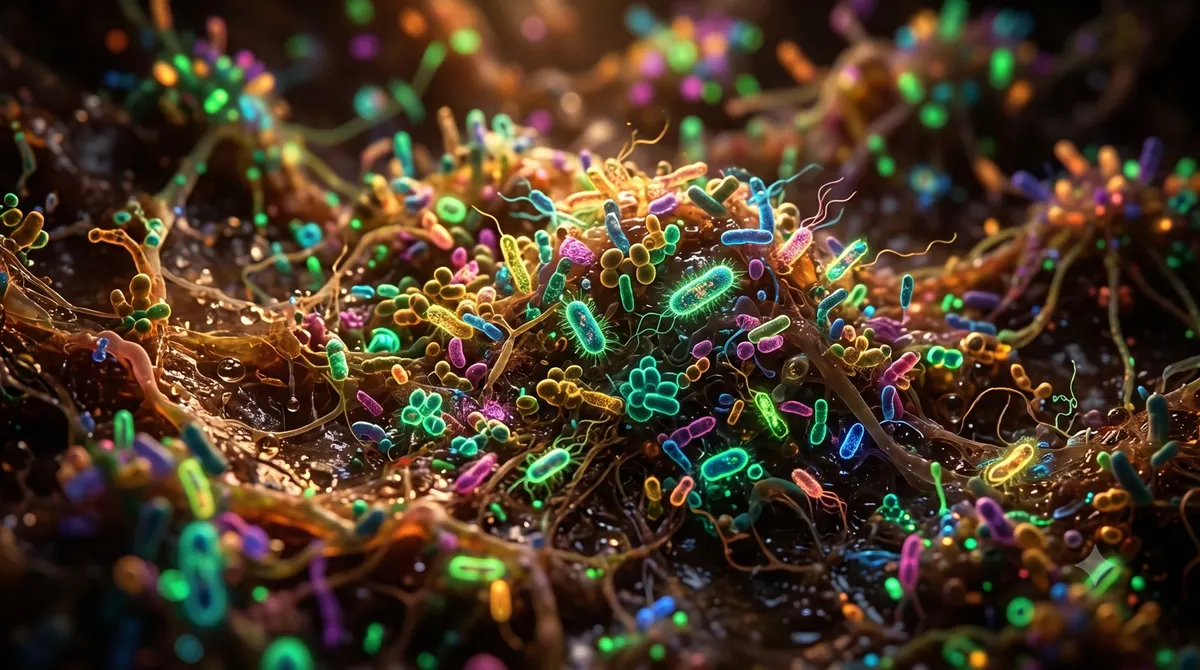
You are never truly alone. Right now, inside your gut, on your skin, and in countless corners of your body, trillions of microscopic organisms are living out their lives. Bacteria, along with fungi, viruses, and other tiny creatures, make up what scientists call the human microbiome. Far from being unwelcome hitchhikers, these microbes are so deeply woven into how our bodies work that some researchers describe us less as single organisms than as walking, breathing ecosystems.
A hidden world within
The numbers are hard to grasp. The microbes living in and on you number in the trillions, rivaling the count of your own cells. Most of them make their home in your intestines, a warm, dark, nutrient-rich environment that turns out to be one of the most densely populated habitats on Earth. Gathered together, all these microbes would weigh a couple of pounds—roughly the weight of your brain.
What matters even more than their number is their diversity. A healthy gut may host hundreds of different species, each with its own talents and preferences, forming a complex community that shifts and settles over the course of your life. This is not a random collection of germs but something more like a rainforest: an intricate web of organisms interacting, competing, and cooperating inside you.
Your microbiome is also, in a sense, uniquely yours. No two people carry exactly the same mix of microbes, and the community you end up with is shaped by a lifetime of influences: how you were born, what you ate as an infant, where you have lived, the medicines you have taken, and the people and animals you share your life with. It begins forming in earliest childhood and keeps changing, a living fingerprint that both reflects your history and helps write your future health.
The great digesters
The most familiar job of your microbiome is helping you digest your food. Your own body simply cannot break down certain components of what you eat, especially many of the tough fibers found in plants. Your gut microbes can. They ferment these fibers, extracting energy and, in the process, producing substances that nourish the cells lining your intestine and benefit your body in other ways.
In exchange for a steady supply of food and a stable place to live, these microbes provide a service we could not easily do without. They also help produce certain vitamins and assist in processing compounds our own biology struggles with. This is why what you eat matters so much: your diet is not just feeding you, it is feeding the vast community inside you, and a diet rich in varied plant fibers tends to support a richer, healthier microbial world.
Training the immune system
Perhaps even more remarkable is the microbiome’s role in your defenses. From the moment we are born, our resident microbes help teach the immune system its most important lesson: how to tell friend from foe. A well-populated gut helps the immune system calibrate itself, learning when to attack and, just as crucially, when to stand down.
Friendly microbes also protect us more directly. By occupying space and consuming resources, they crowd out harmful invaders, leaving less room for dangerous bacteria to take hold. A balanced microbiome is a kind of living shield. When that balance is disturbed—by illness, poor diet, or a heavy course of antibiotics that kills helpful microbes along with harmful ones—it can leave the door open for problems, from stubborn infections to inflammation.
This partnership is a two-way street that biologists call mutualism: both sides benefit. We give our microbes food and shelter; they give us services we could never perform alone. Over the long span of evolution, our bodies and our resident microbes have grown so entangled that it no longer makes complete sense to talk about where one ends and the other begins. We did not simply acquire these microbes; in a real sense, we evolved alongside them, and our biology now assumes their presence.
The surprising gut-brain connection
One of the most intriguing frontiers in this field is the link between the gut and the brain. It turns out the two are in constant conversation, connected by nerves, hormones, and chemical signals. The gut is laced with so many nerve cells that it is sometimes called a second brain, and the microbes living there appear to be part of the dialogue.
Studies—many still in early stages—suggest that the microbiome may influence mood, stress, and aspects of mental well-being. Some gut microbes are involved in producing or shaping the chemical messengers that the brain also uses. This does not mean bacteria are secretly running your mind, and much remains uncertain. But the old idea that the gut and the brain were separate worlds is giving way to a picture in which the two are intimately connected, with our microbial passengers whispering into the conversation.
Living well with your microbes
If we are ecosystems, then it makes sense to tend the ecosystem well. Research increasingly links an imbalanced or impoverished microbiome to a range of conditions, though untangling cause from effect is genuinely difficult—it is often unclear whether a disturbed microbiome drives a disease or simply results from it. What does seem clear is that variety and balance are good signs, and both can be nurtured. Broadly, the microbiome tends to thrive on:
- A diet rich in diverse plants, fiber, and fermented foods.
- Using antibiotics only when genuinely needed, since they disrupt the whole community.
Beyond everyday habits, scientists are exploring bolder interventions, including transplanting healthy microbial communities to treat certain stubborn gut infections—an approach that has shown real promise for specific conditions.
It can be a strange feeling to learn that so much of your inner life is shared with organisms you never chose and cannot see. But the microbiome invites a gentler way of thinking about ourselves—not as isolated individuals fighting off a hostile world of germs, but as partners in a lifelong collaboration. The trillions living inside you are not invaders to be conquered. They are, in a very real sense, part of what makes you you.