 Talking Science Podcast
The Ozone Layer – A Problem We Actually Fixed
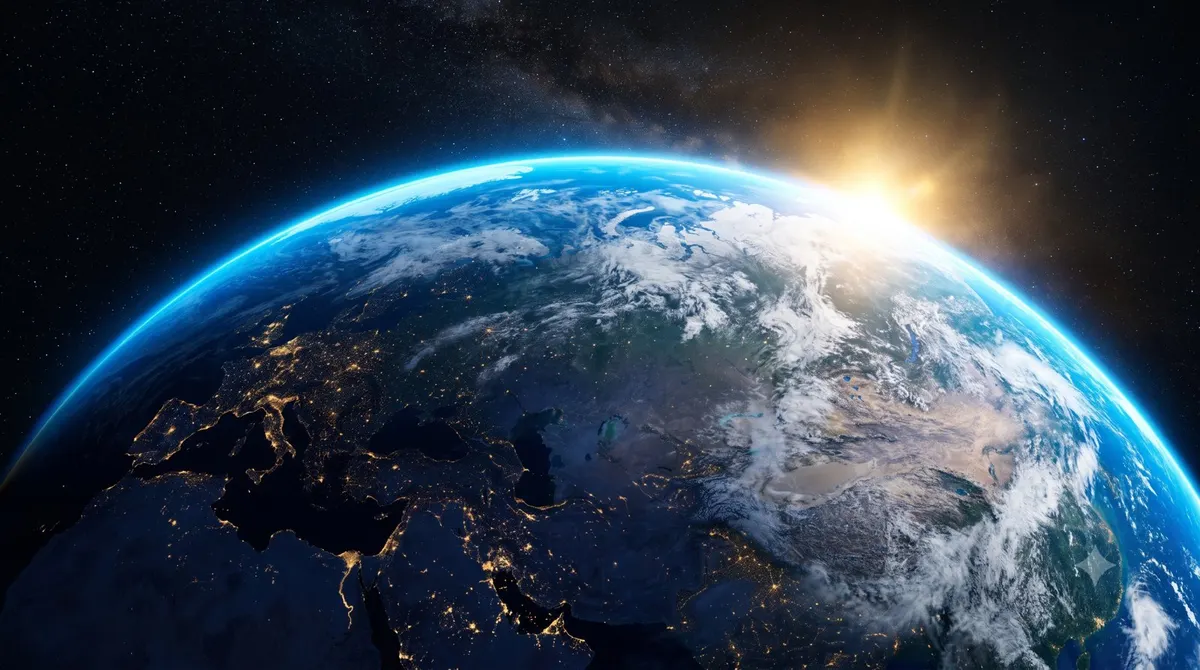
Somewhere far above your head, higher than any aircraft flies, there is an invisible shield made of a faint blue gas. You cannot see it or feel it, yet without it life on the surface would be scorched by radiation from the Sun. This is the ozone layer, and its story is unusual among environmental tales. It is not a warning about damage still to come. It is a rare and genuine success, the story of a global problem that humanity recognised, acted on, and largely fixed.
A sunscreen in the sky
Ozone is a form of oxygen. The oxygen we breathe is made of two atoms joined together. Ozone is made of three. This slightly different molecule is rare in the air near the ground, but high up, in the layer of the atmosphere called the stratosphere, it forms a thin, invisible band that wraps the whole planet. If you gathered all that ozone and squeezed it down to the density of air at sea level, it would be only a few millimetres thick. Yet that flimsy layer does something vital.
The Sun does not only send us light and warmth. It also sends ultraviolet radiation, a form of energy invisible to our eyes but powerful enough to damage living cells. The ozone layer acts as a sunscreen for the entire planet, absorbing much of the most harmful ultraviolet rays before they reach the ground. Without it, the surface would be bathed in radiation that causes skin cancer, harms the eyes, and damages plants and the tiny ocean life at the base of the food web.
The hole we punched
In the 1970s and 1980s, scientists made an alarming discovery. The ozone layer was thinning, and over Antarctica each spring it was dropping so dramatically that researchers spoke of an “ozone hole.” Something was destroying our planetary sunscreen. The question was what.
The culprit turned out to be a family of human-made chemicals called chlorofluorocarbons, or CFCs. These were considered wonder chemicals: stable, non-toxic, and useful. They were used in spray cans, refrigerators, air conditioners, and foam. Precisely because they were so stable, they drifted intact all the way up into the stratosphere. There, the Sun’s rays broke them apart, releasing chlorine atoms. And a single chlorine atom, through a chain of reactions, could destroy many thousands of ozone molecules before it was finally removed. A gas invented for kitchens was quietly eating away at the shield protecting all life below.
The world agrees to act
What happened next is the remarkable part. Faced with this threat, the nations of the world did something they rarely manage: they agreed to fix it, and quickly. In 1987 they signed an agreement known as the Montreal Protocol, committing to phase out the chemicals destroying the ozone layer. Over the following years the agreement was strengthened, and eventually every country on Earth signed on.
Several things made this success possible. The science was clear and the danger was easy to grasp. Industry, though hesitant at first, was able to develop safer substitute chemicals to replace CFCs in fridges and spray cans. And crucially, the threat felt personal and universal, since a damaged ozone layer threatens everyone under the sky. The result was one of the most successful environmental treaties ever created.
A shield on the mend
Because CFCs linger for a long time once they reach the upper atmosphere, the ozone layer could not heal overnight. But heal it is. With the ozone-destroying chemicals phased out, their concentration in the atmosphere has been falling, and scientists monitoring the sky have seen encouraging signs of recovery. The projections suggest that, if the world sticks to the agreement, the ozone layer should return to its earlier health over the coming decades.
This is worth pausing on. A global environmental crisis was identified, its cause was pinned down, and coordinated human action set it on the path to repair. It did not fix itself, and it was not too late. People noticed a problem and chose to solve it together.
Ozone and climate: not the same thing
It is worth clearing up a common mix-up, because many people confuse the ozone hole with climate change. They are related atmospheric issues but they are not the same. The ozone problem is about a shield high in the sky being destroyed by specific chemicals, letting harmful ultraviolet rays through. Climate change is about heat-trapping gases, chiefly carbon dioxide, warming the planet as a whole. Fixing the ozone layer did not stop global warming.
Interestingly, the two do connect in a happy way. Many of the CFCs banned to save the ozone layer were also powerful greenhouse gases. So by phasing them out, the world also avoided a significant amount of extra warming, a bonus benefit that came alongside repairing the shield.
Lessons worth remembering
Why did the world manage to solve the ozone problem when other environmental challenges have proven so stubborn? Part of the answer is that the science pointed to a fairly small number of specific chemicals made by a limited set of industries, which made them easier to target and replace. The threat was also easy to picture: a hole in the sky letting dangerous rays through, affecting everyone regardless of where they lived. And workable substitutes existed, so switching away from CFCs did not demand that people give up refrigeration or reinvent their whole way of life.
Climate change is a harder problem on every one of these counts, because the gases at fault come from nearly everything we do, from heating homes to growing food to moving around. But the ozone story still teaches something valuable. It shows that international cooperation on the environment is genuinely possible, that acting early is far cheaper than acting late, and that trusting careful science can lead to decisions that pay off for generations. It is an encouraging template, even if the next challenge is bigger.
The ozone story deserves to be told more often, because so many environmental stories end on a note of worry. This one offers something rarer: proof that when people take a threat seriously, follow the science, and work together across borders, they can undo real harm. The invisible shield above us is slowly knitting itself back together, and it is doing so because human beings, for once, looked up, understood what they were breaking, and decided to stop. If we ever need reason to believe that big problems can be solved, it is drifting quietly overhead.


