 Talking Science Podcast
The Water Cycle – The Journey of Every Drop
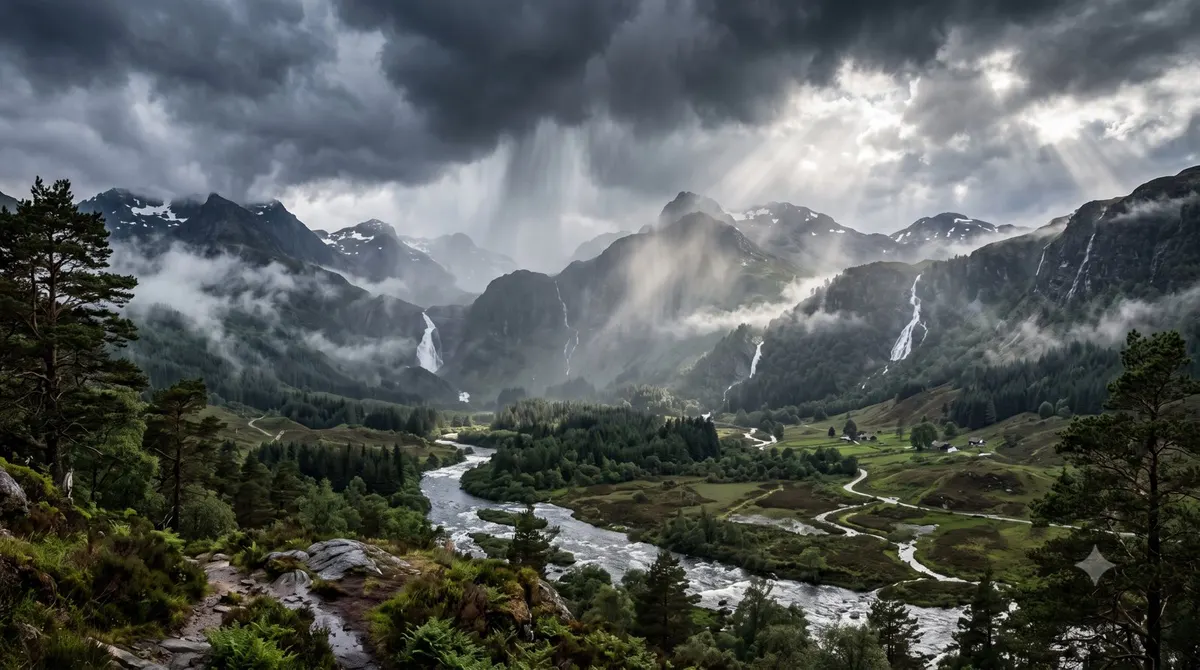
Take a sip of water and consider, for a moment, where it has been. The water passing your lips may once have drifted as a cloud over a distant ocean, fallen as snow on a mountain, seeped through ancient rock, or been drunk by a dinosaur a hundred million years ago. The Earth has essentially the same water it has always had, endlessly recycled. Not a single drop is ever truly lost. Instead it travels a great looping journey between sea and sky and land, a journey we call the water cycle, and it has been turning since the world was young.
Powered by the Sun
The whole cycle runs on sunshine. When sunlight falls on the surface of the ocean, a lake or a puddle, it warms the water and gives some of its molecules enough energy to break free and rise into the air as invisible vapour. This is evaporation, the quiet transformation of liquid water into gas. It happens constantly, all over the world, though most of it takes place over the vast oceans that cover most of the planet.
Plants join in too. Through their leaves they release water vapour into the air in a process called transpiration, effectively breathing out moisture they have drawn up from the soil. A single large tree can lift a surprising amount of water skyward each day. Between the evaporating oceans and the transpiring forests, an immense quantity of water rises invisibly into the atmosphere at every moment.
Clouds, the Sky’s Reservoirs
Water vapour does not stay a gas forever. As the moist air rises, it cools, because the higher you go in the atmosphere the colder it generally becomes. Cool air cannot hold as much water vapour as warm air, so the vapour begins to gather onto tiny floating specks of dust and salt, turning back into minute droplets of liquid. This gathering is called condensation, and countless such droplets together form a cloud.
A cloud, then, is not a mass of vapour but a vast collection of tiny water droplets or ice crystals, so small and light that they drift on the air. You can see the same process on a cold day when your breath fogs, or when dew forms on grass overnight. Clouds are simply this everyday magic performed on an enormous scale, floating reservoirs holding water aloft until conditions send it back down.
The Return to Earth
Inside a cloud, droplets bump and merge, growing larger. When they become too heavy for the air to hold, they fall as precipitation, the family name for rain, snow, sleet and hail. Which form arrives depends chiefly on temperature: warm air delivers rain, freezing air delivers snow. This falling water is the moment the sky gives its gift back to the land and sea below.
Most precipitation falls straight back onto the oceans, completing a short version of the cycle. But the portion that falls on land begins a more adventurous chapter. Some soaks into the soil, some is taken up by plants, and some runs downhill in streams and rivers. Every drop that lands on a mountainside is, in a sense, beginning the long walk home to the sea.
Rivers, Ice and Hidden Water
Water on land takes many paths and moves at wildly different speeds. Rainwater that runs off the surface gathers into streams, which join into rivers, which wind their way back toward the ocean, carving valleys and carrying nutrients as they go. Other water sinks deep underground, filling the spaces in soil and rock to form groundwater, a vast hidden store that feeds springs and wells and can linger underground for a very long time.
Still more water is locked away as ice in glaciers and polar caps. Some of this frozen water has been held for thousands of years, a slow branch of the cycle where a snowflake may wait an age before finally melting and rejoining the flow. Between the racing rivers and the patient glaciers, water moves through its cycle on timescales ranging from days to millennia.
Why the Cycle Matters
The water cycle is far more than a tidy diagram from a school textbook. It is the system that delivers fresh water to the land, and nearly every living thing depends on it. Without evaporation and rainfall, there would be no rivers to drink from, no rain to grow crops, no green landscapes at all. The cycle also shapes weather and climate, moving not just water but heat around the globe, cooling the surface where water evaporates and warming the air where it condenses.
Because everything is connected, changes in one part ripple through the whole. A warming world speeds up evaporation and lets the air hold more moisture, which can shift rainfall patterns, bringing heavier downpours to some regions and deeper droughts to others. Understanding the cycle helps us understand the shifts already underway.
The Ocean’s Great Conveyor
The water cycle does more than move moisture between sea and sky; it also helps drive the vast currents that circle the oceans, and those currents shape the climate of whole continents. When water evaporates from warm tropical seas it leaves its salt behind, and where seawater freezes near the poles the salt is likewise left in the water below. Saltier water is heavier, and heavier water tends to sink, setting in motion a slow, deep circulation that carries warmth around the globe.
This grand flow is part of why some coastal regions enjoy milder weather than their latitude would suggest, warmed by ocean currents ferrying heat from distant tropics. The water cycle and the ocean are partners in a single planetary machine, redistributing not only water but the Sun’s warmth. Change the flow of fresh water into the sea, as a warming world can, and these ancient currents may shift in ways that ripple far across the map.
An Endless, Shared Inheritance
There is a quiet wonder in knowing that the water cycle has no beginning and no end. The rain that waters a field today may rise again tomorrow, drift across a continent, and fall as snow on a peak next winter. Every drop is borrowed, used, and passed on. The same water has nourished every generation of life that has ever existed and will nourish every generation to come. To follow the journey of a single drop is to see how deeply the living world is woven together, all of us sharing one ancient, ever-turning supply.


