 Talking Science Podcast
Volcanoes – Windows into the Deep Earth
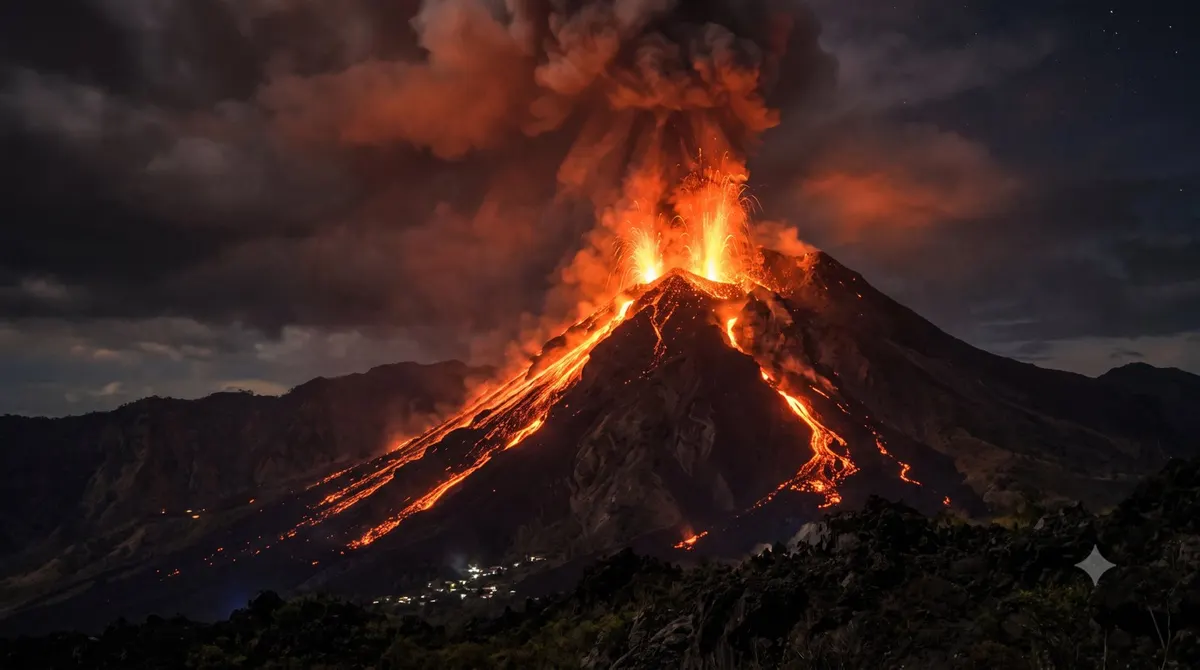
There is something both terrifying and mesmerising about a volcano. A mountain that breathes fire, that can lie quiet for centuries and then wake with a roar, has haunted human imagination for as long as we have told stories. Yet a volcano is not a monster or a punishment. It is a window, a place where the hidden interior of our planet briefly reveals itself, spilling molten rock and gas from depths we can never reach by any other means. To understand volcanoes is to glimpse the machinery of the Earth itself.
Fire From Below
Deep beneath the ground, the rock is fantastically hot. In certain places conditions are right for some of that rock to melt, forming a thick, glowing liquid called magma. Because this molten rock is lighter than the solid rock around it, it slowly rises, gathering in chambers below the surface and forcing its way upward through cracks and weaknesses. When it finally breaks through to the open air, we call it a volcano, and the molten rock, once it emerges, earns a new name: lava.
Along with the lava come gases that were dissolved in the magma under pressure, chiefly water vapour and carbon dioxide among others. These gases are the key to a volcano’s temper. As magma rises and the pressure eases, the gases try to escape, rather like the fizz in a shaken bottle. How easily they get out decides whether a volcano oozes gently or erupts with catastrophic violence.
Why Some Volcanoes Whisper and Others Scream
Not all volcanoes behave alike. Some, like those of Hawaii, produce runny lava that flows in glowing rivers you can almost walk beside. The lava is thin enough that gases bubble out easily, so eruptions tend to be spectacular but relatively gentle. These volcanoes build broad, gently sloping mountains over long ages.
Other volcanoes are far more dangerous. Where the magma is thick and sticky, gases cannot escape smoothly. Pressure builds and builds until the mountain bursts open in a colossal explosion, hurling ash, rock and searing clouds of gas into the sky. The difference comes down largely to the chemistry of the magma: stickier magmas trap their gases and store up energy for violent release, while runny magmas let it out quietly. A single word, viscosity, meaning how easily a liquid flows, separates a peaceful volcano from a deadly one.
Where Volcanoes Are Born
Volcanoes are not scattered at random across the world. Most cluster along the boundaries between the great tectonic plates that make up the Earth’s outer shell. Where one plate dives beneath another, it carries water and rock down into the hot interior, encouraging the rock above to melt and rise. This is why a ring of volcanoes encircles much of the Pacific Ocean, a zone so active it is called the Ring of Fire.
Where plates pull apart, magma wells up to fill the gap, much of it beneath the oceans along vast underwater ridges. And a few volcanoes appear far from any plate boundary, sitting over unusually hot plumes of rising rock deep in the mantle. The Hawaiian Islands are the classic example, a chain of volcanoes built one after another as a plate drifted slowly over a stationary hot spot beneath.
Builders and Destroyers
It is easy to think of volcanoes only as agents of destruction, and their power to harm is real. Ash can bury towns, lava can swallow fields, and great eruptions have altered the course of history. Yet volcanoes are also among the planet’s great builders. Whole islands, and even continents in part, owe their existence to volcanic rock piled up over millions of years.
Volcanoes enrich the world in quieter ways too. The ash they scatter breaks down into remarkably fertile soil, which is why people have farmed the slopes of active volcanoes for thousands of years despite the danger. Over the immense span of Earth’s history, gases released by volcanoes helped build the atmosphere and oceans themselves. In a real sense, we owe the air we breathe partly to volcanic breath exhaled long ago.
Reading the Warning Signs
Because volcanoes hold such danger, scientists work hard to understand their moods. A volcano rarely erupts without warning. As magma stirs and rises beneath the surface, it sends up signals: swarms of small earthquakes, a subtle swelling of the ground, changes in the gases escaping from vents, shifts in temperature. Instruments placed on and around volcanoes listen for these clues day and night.
Forecasting eruptions is not yet an exact science, and volcanoes still hold surprises. But the ability to warn people even hours or days ahead has saved countless lives. Each eruption studied teaches scientists a little more about what lies beneath, turning these fearsome mountains into laboratories of the deep.
When Volcanoes Touch the Whole World
The largest eruptions do not only threaten those living nearby; they can reach across the entire planet. When a truly powerful volcano blasts great quantities of ash and gas high into the atmosphere, some of that material spreads around the globe. Fine droplets formed from volcanic gases can hang in the upper air for months or even a year or more, reflecting a little sunlight back to space before it reaches the ground.
The effect can be a temporary cooling of the whole planet’s surface, enough in a few historic cases to disrupt harvests and give the world an unusually cold season. It is a striking reminder that the Earth’s systems are deeply linked, that a single mountain venting its fury can nudge the climate of continents far away. Such events are rare, but they show how the deep interior, the atmosphere and the living surface all belong to one connected world.
A Glimpse Into the Depths
We cannot journey to the centre of the Earth. The deepest holes humans have ever drilled barely scratch the surface of the whole vast interior. Volcanoes offer the next best thing, delivering samples of the hidden depths straight to our doorstep. In their glowing lava and drifting ash we read the chemistry and heat of a world we can never visit directly. For all their menace, volcanoes are extraordinary teachers, windows through which the restless heart of our planet shows itself, if only we are wise enough to look and learn.


