 Talking Science Podcast
Weather vs Climate – Why the Difference Matters
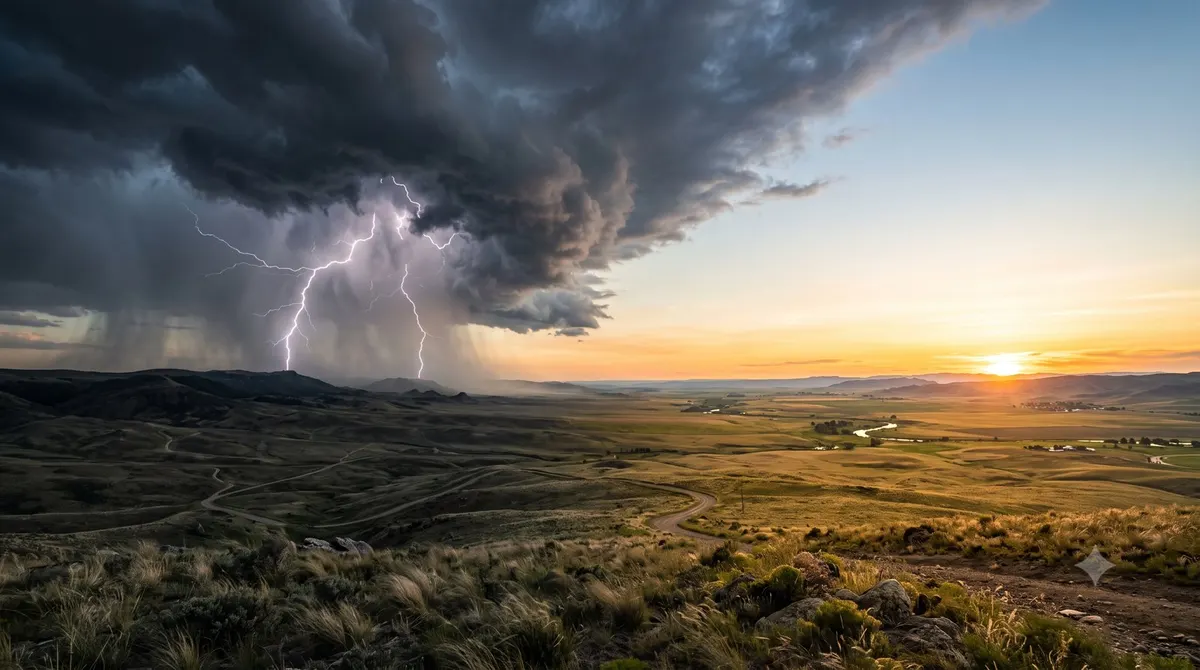
On a bitterly cold winter morning, someone will inevitably joke, “So much for global warming.” It is an understandable quip, but it reveals one of the most common misunderstandings in all of science: the confusion between weather and climate. They sound like two words for the same thing, yet they describe the world on completely different scales. Getting the difference straight is one of the most useful things you can do to understand our changing planet.
The quick version
Here is the simplest way to hold the two apart. Weather is what is happening in the atmosphere right now, or over the next few days: today’s rain, tomorrow’s sunshine, this weekend’s storm. Climate is the bigger picture, the average pattern of weather over many years in a place: the fact that deserts are dry, that the tropics are warm, that your region tends to have snowy winters or mild ones.
A neat way to remember it is this: climate is what you expect, weather is what you get. Climate tells you to pack a coat for a December trip to Norway. Weather decides whether that particular day is clear or snowing. One is about the odds; the other is about a single roll of the dice.
A matter of time
The real difference between weather and climate is time. Weather changes from hour to hour and day to day. It is the swirl of highs and lows, fronts and winds that meteorologists track on their maps. Because the atmosphere is so restless and complex, weather is famously hard to predict more than a week or so ahead.
Climate is what you get when you step back and average all that chaos over a long stretch, traditionally about thirty years. Individual days blur together, and a steadier pattern emerges. A single cold snap disappears into the average, just as one tall person does not change the average height of a whole country. Climate is the personality of a place’s weather; weather is its mood on a given day.
Why a cold day proves nothing
Now we can see why that winter joke misses the mark. A cold day, or even a cold month, is weather. It is a single data point in a vast, noisy record. Global warming is a statement about climate, about the long-term average temperature of the whole planet slowly rising over decades. The two live on such different scales that one cannot disprove the other.
Think of it like a coin that is very slightly weighted toward heads. Any single flip can still come up tails, and you might even get several tails in a row. That does not mean the coin is fair. You only see the bias by counting thousands of flips. In the same way, cold days and even harsh winters still happen in a warming world. What changes is the long-run balance: over the decades, hot records are broken more often than cold ones, and the averages creep upward.
How we measure a changing climate
If climate is a decades-long average, how do scientists actually pin it down? They gather enormous quantities of measurements: temperatures from weather stations across the land, readings from ships and floating buoys across the oceans, and data from satellites watching the whole planet from above. All of this is combined to estimate the average temperature of the Earth’s surface year by year.
To reach back before thermometers existed, researchers turn to natural records that respond to climate. Tree rings grow wider in good years and narrower in harsh ones. Layers in ice sheets and corals lock in signs of past conditions. By stitching together modern measurements and these natural archives, scientists can trace how the climate has shifted over centuries and beyond, and see clearly that the recent warming stands out.
Why the difference matters in practice
This is not just a debate about definitions. Mixing up weather and climate leads to real confusion and poor decisions. If you judge climate by the last few days of weather, you will lurch from panic to complacency and back again, because weather is always doing something dramatic somewhere. Climate asks you to look past the daily drama and watch the slow trend underneath.
The distinction matters for planning, too. Farmers, city planners, and engineers rely on climate to make long-term choices: which crops to grow, how high to build flood defences, how to design buildings for the heat. They use weather forecasts for the short term and climate knowledge for the long term. When the climate itself starts to shift, the old assumptions that guided those decisions begin to fail, which is exactly why the difference is so important right now.
How climate shapes weather
It also helps to see how the two are linked rather than opposed. Climate is really the sum of all the weather a place experiences, and as the climate shifts, it changes the odds for the weather we get. A slightly warmer world does not scrap the seasons or abolish cold snaps, but it loads the dice. Heatwaves become a little more likely and a little more intense. Heavy downpours grow more common as warmer air holds more moisture. Droughts can bite harder in places that dry out.
This is why scientists rarely say that any single storm or hot spell was simply caused by climate change. Instead they talk about how a warming climate made such an event more likely or more severe. Weather remains the day-to-day roll of the dice; climate change is a slow reshaping of the dice themselves. Keeping that relationship in mind lets you make sense of the headlines without falling into either panic over one hot day or dismissal because of one cold one.
So the next time the sky does something surprising, enjoy the weather for what it is: the ever-changing mood of the atmosphere over your head today. Just remember that it is only one frame in a very long film. To understand where the planet is heading, you have to watch the whole reel, averaged over years and decades. Weather is the story of a day. Climate is the story of an age, and telling the two apart is the first step to understanding both.


