 Talking Science Podcast
Antibiotics and the Resistance Crisis
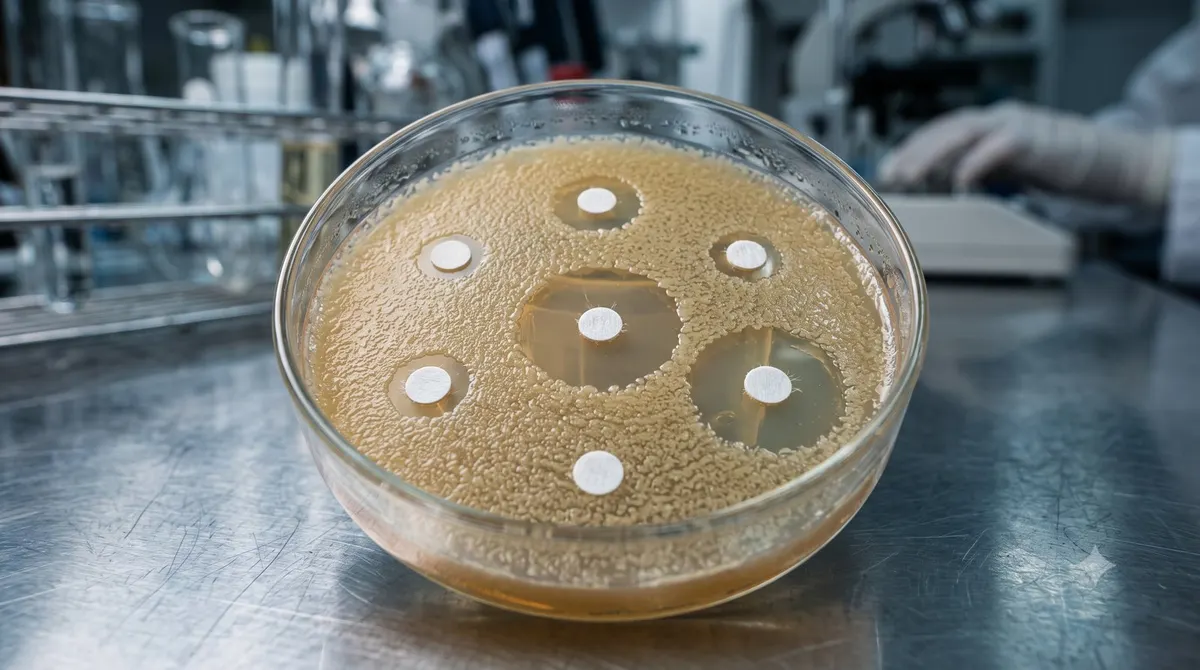
There was a time, not so long ago, when a scratch from a rose thorn could kill you. A simple infection, a routine surgery, a bout of pneumonia: any of these could be a death sentence. Then came antibiotics, and the world changed almost overnight. Suddenly, diseases that had haunted humanity for millennia could be cured with a few pills. It was one of the greatest leaps in the history of medicine. And now, quietly and steadily, we are in danger of losing it.
The Accidental Miracle
The antibiotic era began, famously, by accident. A researcher noticed that a mold contaminating one of his laboratory dishes was killing the bacteria around it. That mold produced a substance we came to know as penicillin, the first widely used antibiotic. It took years of further work to turn the observation into a usable drug, but once it arrived, it saved countless lives, especially among wounded soldiers who would otherwise have died of infection.
What made the discovery so powerful was a stroke of biological luck. It is possible to find substances that are deadly to bacteria while leaving human cells largely unharmed, because bacterial cells are built quite differently from ours. That difference is the entire foundation on which antibiotics rest.
How Antibiotics Fight
Antibiotics work by exploiting the features that make bacteria bacteria. Some attack the tough outer wall that surrounds a bacterial cell, a structure our own cells lack, causing the invader to burst. Others jam the machinery bacteria use to build proteins, or block them from copying their DNA, so they cannot multiply. In each case the drug targets something essential to the bacterium but absent or different in us.
It is worth being clear about one thing: antibiotics work only against bacteria. They do nothing against viruses, which cause colds, the flu, and many sore throats. Taking an antibiotic for a viral infection does no good at all, and, as we will see, it can do real harm.
The Bacteria Fight Back
Bacteria are living things, and living things evolve. In any large population of bacteria, a few individuals may happen to carry a trait that lets them survive a particular antibiotic. When the drug arrives and kills the vulnerable majority, those few survivors are left with the field to themselves. They multiply, and soon the whole population is resistant. This is evolution by natural selection, playing out in a matter of days.
Worse, bacteria can share the genetic instructions for resistance with one another, sometimes even between different species, passing along the trick like a recipe. So resistance does not just build slowly; it can spread. Every time we use an antibiotic, we apply a little pressure that favors resistant bacteria, which is why overuse is so dangerous.
How We Made It Worse
Resistance is a natural process, but human behavior has accelerated it dramatically. When antibiotics are prescribed for illnesses they cannot treat, such as viral infections, bacteria are exposed to the drugs for no benefit, breeding resistance without ever curing anyone. When people stop taking a course of antibiotics early, because they feel better, the hardiest bacteria may survive and rebound.
Large quantities of antibiotics are also used in raising farm animals, often to promote growth or prevent disease in crowded conditions rather than to treat sickness. This vast, steady exposure gives bacteria endless opportunities to adapt. The result is a growing collection of infections that our once-reliable drugs can no longer defeat.
The Threat of a Post-Antibiotic World
The stakes are hard to overstate. Antibiotics do not just cure infections; they make much of modern medicine possible. Surgery, chemotherapy for cancer, organ transplants, and the care of premature babies all rely on being able to prevent and treat infection. If antibiotics fail, all of these become far more dangerous.
Some infections have already emerged that resist most or nearly all available drugs, and developing new antibiotics is slow and difficult work. For a long time, few new ones were being discovered, leaving us with a shrinking arsenal against an evolving enemy. This is the quiet crisis that public health experts warn about.
An Arms Race as Old as Life
It helps to see resistance in a longer view. Bacteria and the molds and microbes that produce natural antibiotics have been locked in chemical warfare for millions of years, long before humans arrived. Resistance genes are ancient; they existed in nature well before we ever bottled a drug. What we did was take one side of that age-old struggle, mass-produce it, and spread it across the whole world at once, dramatically speeding up the bacteria’s response.
Understanding this changes how we think about the problem. We are not going to defeat bacterial evolution; it is far older and more relentless than we are. The realistic goal is to stay ahead of it, to slow resistance down, to preserve the drugs we have, and to keep discovering new ones. It is less a war to be won once than a race to be run continually, and running it well is entirely possible.
What Can Still Be Done
The situation is serious but not hopeless, and much of the solution lies in using what we have more wisely. That means taking antibiotics only when they are genuinely needed, following the full course a doctor prescribes, and never pressuring for antibiotics to treat a virus. It means better hygiene and vaccination to prevent infections in the first place, so fewer antibiotics are needed at all.
On a larger scale, it means using antibiotics more responsibly in agriculture, investing in the search for new drugs, and improving how we track resistant infections across countries and borders, since bacteria pay no attention to maps. Scientists are also exploring fresh approaches, from viruses that specifically attack bacteria to smarter ways of using the drugs we already have, so that the arsenal does not run dry.
None of this is beyond us. Antibiotics were one of humanity’s greatest gifts to itself, a moment when a chance observation lifted an ancient shadow of death from everyday life. Preserving them is a challenge we are fully capable of meeting, if we choose to take it seriously and treat these remarkable drugs as the precious, finite resource they truly are. As always, decisions about medication are best made with a healthcare professional.


