 Talking Science Podcast
Hormones – The Body’s Chemical Messengers
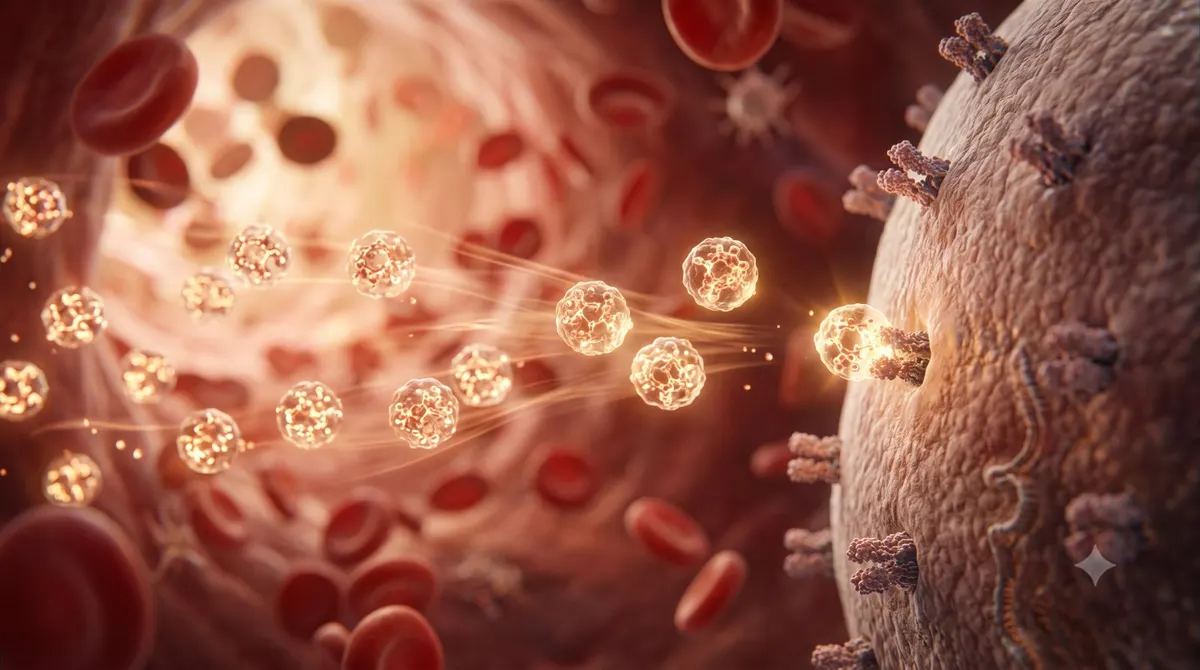
Imagine trying to run a country where no one could speak, write, or send a message. Every region would act on its own, with no coordination, no shared plan. Your body faces exactly this challenge. It is made of trillions of cells spread across many organs, and somehow they must act in concert. One of the great solutions to this problem is a silent chemical postal service that has been running inside you your entire life: your hormones.
Messages in the Bloodstream
A hormone is, at its simplest, a chemical messenger. It is made in one part of the body, released into the bloodstream, and carried to distant places where it delivers an instruction. Think of it as a message dropped into a river that flows everywhere, reaching cells far from where the note was written. This is a slower but longer-lasting way of communicating than the fast electrical signals of the nervous system, and the two systems complement each other beautifully.
The organs that produce hormones make up the endocrine system, a scattered collection of glands rather than a single tidy structure. They sit in various places, the neck, the brain, above the kidneys, in the reproductive organs, each specialising in particular messages. Together they coordinate an astonishing range of the body’s activities.
The Lock and Key
Here is a puzzle. If a hormone travels everywhere in the blood, how does it affect only the right cells? A message that reaches every organ but is meant only for one would seem hopelessly indiscriminate. The elegant answer lies in receptors.
Cells that are meant to respond to a particular hormone carry matching receptors, molecular docking sites shaped to fit that specific hormone like a key fits a lock. Cells without the right receptor simply ignore the passing message. So although a hormone floods the whole body, only cells equipped to receive it will act. This lock-and-key arrangement lets a single chemical carry a precise instruction to exactly the tissues that need it, while everyone else carries on undisturbed.
What Hormones Actually Do
The reach of hormones is enormous. They govern growth from infancy to adulthood, telling bones and tissues when to lengthen and when to stop. They control metabolism, the rate at which your body burns fuel and generates heat. They manage how your body handles sugar, regulate the balance of water and salts, and orchestrate reproduction and the changes of puberty. They even shape aspects of mood, sleep, and how you respond to stress.
A few familiar examples show the range. Insulin, made in the pancreas, tells cells to take up sugar from the blood for energy. Thyroid hormones set the pace of your metabolism, like a dial controlling the body’s overall tempo. Adrenaline surges in moments of danger, readying you to act. Growth hormone drives the body’s development. Each is a different message in the same postal system, and together they keep a fabulously complex organism working as one.
The Art of Balance
What makes the endocrine system so impressive is not just that it sends messages but that it constantly adjusts them. Hormone levels are not fixed; they rise and fall through the day and in response to what is happening around and inside you. The body achieves this through feedback loops, and the central idea is simpler than it sounds.
Picture the thermostat in a house. When the temperature drops below a set point, the heating switches on; when it rises above, the heating switches off. Many hormones are controlled the same way. When a hormone’s effect reaches the desired level, that very effect signals back to the gland to ease off production. When the level falls, production ramps up again. Through countless such loops, the body keeps its internal chemistry hovering around healthy targets, correcting itself moment by moment without any conscious effort on your part.
When the Balance Tips
Because hormones are so powerful, even small imbalances can have wide effects, which is a testament to how finely tuned the system is. Too little of a hormone, or too much, or receptors that stop responding properly, can ripple outward into many symptoms, since a single hormone often touches many organs at once. This is why hormonal conditions can be puzzling to pin down: the cause is one faulty message, but the consequences appear all over the body.
It is worth being clear and cautious here. Hormonal health is genuinely complex, and this is information, not medical advice. The point for our purposes is simply to appreciate how much depends on these messengers, and how remarkable it is that the system stays balanced as reliably as it does across a lifetime of changing demands.
An Invisible Conductor
We tend to notice our hormones only when something feels off, but their real story is one of quiet, ceaseless coordination. Every day they help you wake and sleep, grow and heal, respond to fear and settle back into calm, all without a word reaching your conscious mind. They are like an invisible conductor keeping a vast orchestra of cells playing in time. The next time your body handles a meal, a fright, or a good night’s rest with effortless grace, you can thank this ancient chemical language, whispering its instructions through your blood.


