 Talking Science Podcast
Memory – How the Brain Stores a Life
Close your eyes and picture your childhood home. Recall a song you love, the face of an old friend, the taste of a favorite meal. In an instant, your brain reaches across years and hands you an experience that no longer exists anywhere except inside your head. This ability to carry the past with us is so ordinary that we rarely marvel at it, yet it is one of the deepest wonders of the mind. Without it there would be no you, only a person forever meeting the world for the first time.
Not a Recording Device
The most important thing to understand about memory is what it is not. We tend to imagine the brain as a kind of video recorder, faithfully capturing events for later playback. This picture is comforting and almost entirely wrong. Memory is not a recording; it is a reconstruction. Each time you remember something, your brain rebuilds the experience from scattered pieces, and it fills in gaps with assumptions and expectations.
This is why memories change over time, why two people can honestly remember the same event differently, and why we can feel utterly certain about things that did not happen quite the way we recall. Memory is less like reading a fixed page and more like retelling a story, and every retelling can subtly reshape it. This is a feature of how the system works, not a flaw in you.
Many Kinds of Memory
Memory is not one thing but several systems working together. There is the fleeting memory that holds a phone number in your mind just long enough to dial it, then lets it vanish. There is the vast store of long-term memory that can hold experiences for a lifetime. And within long-term memory there are different kinds.
Some memory is for facts and events, the sort you can consciously call up and describe: your address, last summer’s holiday, the capital of a country. Another kind is for skills, and it works quite differently. Once you learn to ride a bicycle or type, you do not recall how; your body simply knows. This is why you can forget a name in an instant yet never forget how to swim. These different systems even rely on different parts of the brain.
From Fleeting to Lasting
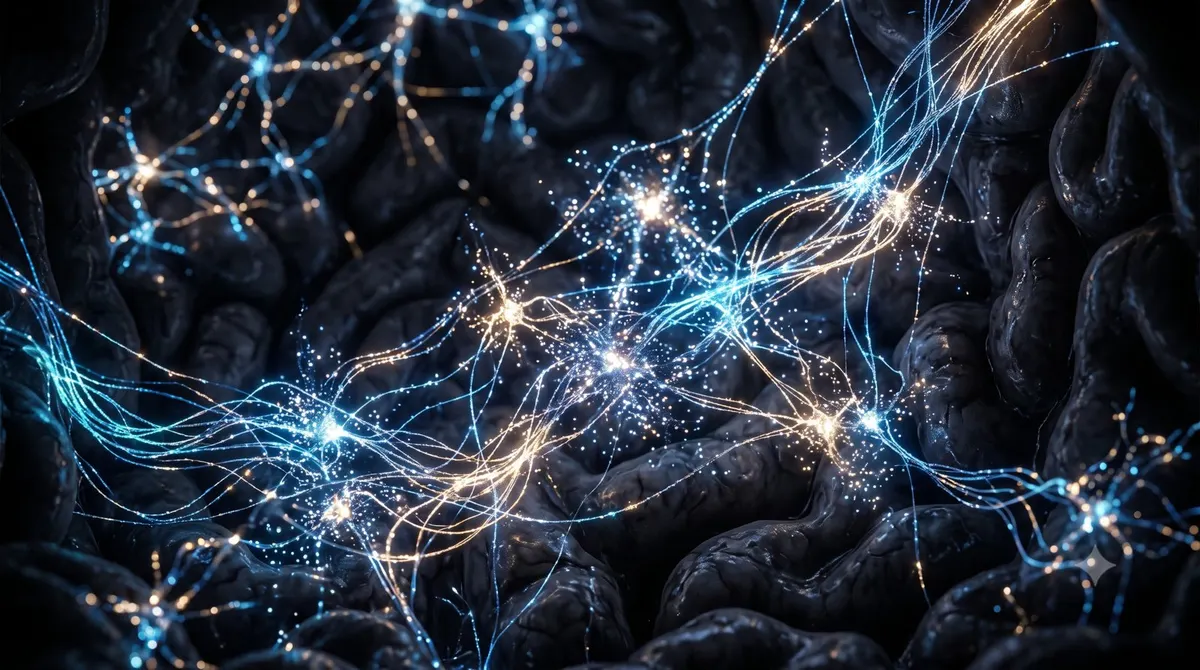
How does a passing moment become a lasting memory? The process is called consolidation, and it takes time. A new experience first exists as a fragile, temporary pattern of activity. If it is to last, the brain must strengthen the connections between the neurons involved, physically reinforcing the circuit so it can be reactivated later. Memory, at bottom, lives in the changing strengths of connections between brain cells.
A small, seahorse-shaped structure deep in the brain, the hippocampus, plays a crucial role in forming new memories of facts and events, acting like a temporary holding area before memories are gradually stored more permanently elsewhere. Sleep is central to this process; much consolidation happens overnight, which is one more reason a good night’s rest helps you hold on to what you have learned.
Why Some Memories Stick
Not all experiences are remembered equally, and the brain is choosy for good reason. Emotion is a powerful fixative. Moments charged with fear, joy, or surprise tend to be remembered vividly, because the brain sensibly flags emotionally important events as worth keeping. This is why you may recall exactly where you were during a shocking piece of news, while thousands of ordinary days blur together.
Attention and repetition matter too. We remember what we focus on and what we revisit. Something met once in passing rarely lasts; something reviewed, used, and connected to what we already know settles in firmly. This is the honest secret behind learning: not raw talent, but attention, repetition, and making connections.
The Gift of Forgetting
We tend to think of forgetting as a failure, but it is better understood as part of the design. A memory that kept everything, every glimpsed face and overheard sentence, would be a nightmare of clutter, unable to find what matters in the noise. Forgetting clears away the trivial so the important can stand out. A healthy memory is one that lets go as skillfully as it holds on.
This is different from the memory loss of illness. Conditions such as dementia involve the physical breakdown of the brain’s memory machinery, gradually eroding the ability to form and keep memories. That is a medical matter, and a serious one, quite distinct from the everyday forgetting that is simply your brain doing its ordinary, healthy work of tidying up.
The Tip of the Tongue
Everyone knows the maddening feeling of a word or a name hovering just out of reach, felt but not quite grasped. This tip-of-the-tongue experience is a small, everyday window into how memory works. It shows that remembering is not all or nothing. You can hold part of a memory, perhaps its first letter or how it sounds, while the whole thing stays stubbornly hidden, which tells us that memories are stored not as single lumps but as networks of connected pieces.
It also reveals that retrieval is its own skill, separate from storage. The memory has not been lost; you simply cannot find the path to it in that moment, and often it surfaces unbidden an hour later once you stop straining for it. This is why a good cue, a related word, a familiar smell, a returning to the place where you learned something, can unlock a memory that direct effort could not. The information was there all along, waiting for the right key.
The Story We Carry
In the end, memory is more than a filing system; it is the thread that stitches a life together. It lets you recognize the people you love, learn from your mistakes, and feel continuous with the child you once were and the person you are becoming. Your sense of who you are is, in large part, the story your memory tells about your past.
That the story is reconstructed rather than recorded need not trouble us. It means memory is alive, woven anew each time we call on it, colored by who we are today. There is something rather beautiful in that: the past you carry is not a dead archive but a living part of you, remade with every remembering. Three pounds of tissue, quietly holding an entire life, and handing it back to you whenever you ask.


