 Talking Science Podcast
Nutrition – What Food Actually Does in the Body
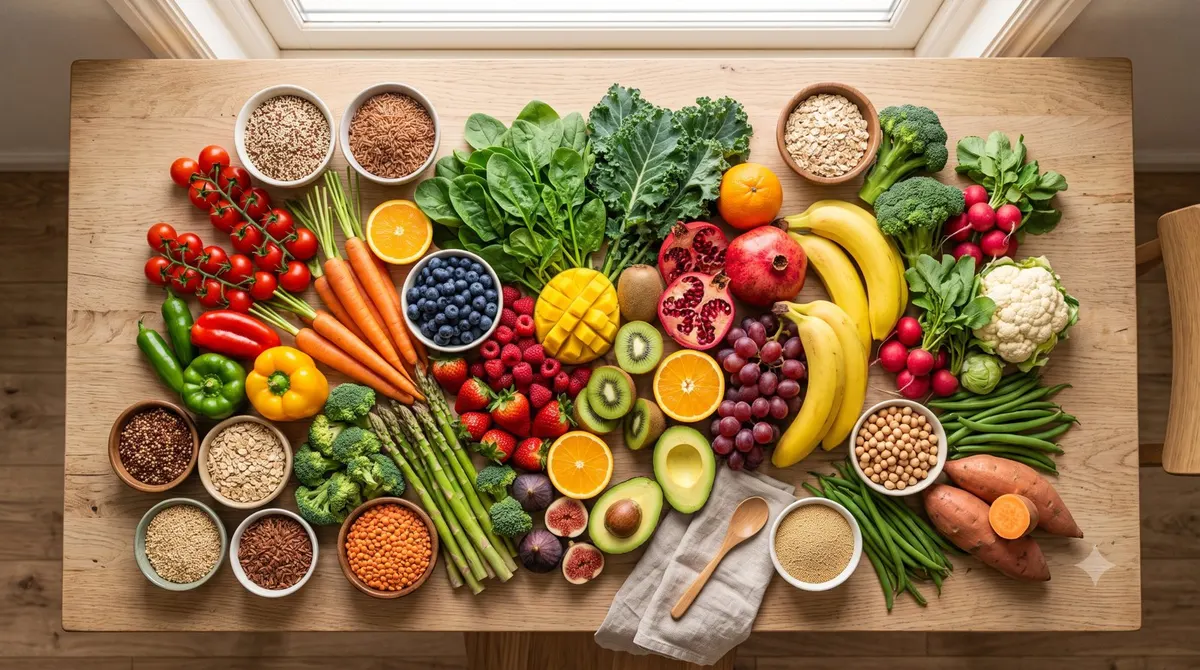
We eat several times a day, every day, for our whole lives, and yet most of us have only the haziest idea of what actually happens to a meal once it disappears from the plate. We know food gives us energy and that some foods are better for us than others. But beneath that everyday knowledge lies a genuinely astonishing process, in which a sandwich or a bowl of rice is taken apart, sorted, and rebuilt into the very substance of you. Food is not just fuel. It is building material, information, and energy all at once.
Taking Food Apart
The food you eat is not in a form your cells can use. A piece of bread is far too complex to be absorbed as it is; it must first be broken down into much smaller pieces. This is the real job of digestion: dismantling large molecules into tiny building blocks small enough to pass into the bloodstream. It begins in the mouth, continues in the stomach, and is largely completed in the small intestine, with help from digestive juices and enzymes that act like molecular scissors, snipping big structures into simple parts.
Once broken down, these small pieces are absorbed through the wall of the intestine into the blood, which carries them off to be used throughout the body. What arrives at your cells, then, is not your lunch but its disassembled components, ready to be put to work.
The Big Three
Most of what we eat falls into three great categories, called macronutrients, and each plays a distinct role. Understanding them makes food far less mysterious.
Carbohydrates are the body’s most readily used energy source. They are broken down mainly into simple sugars, above all glucose, which cells burn for fuel. Proteins are the body’s building materials. They are dismantled into smaller units called amino acids, which your cells then reassemble into your own proteins, the stuff of muscle, enzymes, and much of your body’s machinery. Fats are a concentrated store of energy and also essential raw material for building cell membranes and certain signalling molecules. Far from being merely something to avoid, fats are indispensable to how the body is built and run.
Notice a beautiful theme here: much of what you eat is not simply burned but taken apart and rebuilt into you. You are, quite literally, constructed from your food.
The Helpers in Small Doses
Alongside these bulk nutrients, the body needs a range of vitamins and minerals, known as micronutrients because they are required only in small amounts. Do not mistake small for unimportant. These substances act as essential helpers, often enabling the countless chemical reactions of the body to proceed. Many work hand in hand with enzymes, without which vital processes would grind to a halt.
Because the body cannot make most of these itself, they must come from the diet, and a varied diet is the natural way to gather the full set. This is one honest, well-supported reason behind the familiar advice to eat a range of foods, especially plenty of plants: different foods supply different helpers, and no single food contains them all.
Fuel, Storage, and Balance
What happens to all this energy once it is absorbed? Your body is remarkably good at managing its fuel supply. When energy arrives faster than it is needed, the body stores the surplus, some as a quick-access reserve and much as fat, which is an efficient long-term energy store. When food is scarce and energy runs low, the body draws on these reserves to keep going. This ability to bank energy for later was a lifesaver for our ancestors, who could not count on a steady supply of meals.
Managing this flow requires careful regulation, and the body works constantly to keep its fuel levels steady. Hormones oversee whether energy is stored or released, keeping the amount of sugar in the blood within a healthy range. In this way, eating and using energy is not a simple in-and-out but a continuously balanced system, quietly adjusting to feast and famine alike.
Food as Information
Here is a more modern idea that goes beyond food as mere fuel. What you eat also carries information, in the sense that it influences how your body behaves. A meal can trigger the release of hormones, shift your energy and alertness, and feed the trillions of microbes living in your gut, which in turn produce their own influential compounds. Fibre, for instance, is barely digested by you, yet it is precious food for those helpful microbes and supports the healthy movement of the digestive system.
This is why nutrition is about so much more than counting energy. The same amount of energy from very different foods can affect the body in different ways, nourishing it well or poorly, steadily or in disruptive spikes. Food speaks to the body, and the body listens.
Respect for the Everyday Miracle
None of this is a diet plan, and it is certainly not medical advice; individual needs vary and are best discussed with a professional. But stepping back, it is hard not to feel a little awe. Three times a day you place raw material into your body, and without a moment’s conscious thought it is broken down, sorted, distributed, and rebuilt into energy, tissue, and the ongoing project of keeping you alive. The next time you sit down to eat, you might see the meal a little differently: not just something to enjoy, though it should be that, but the literal substance from which, day by day, you are being remade.


