 Talking Science Podcast
Organ Transplants and Xenotransplantation
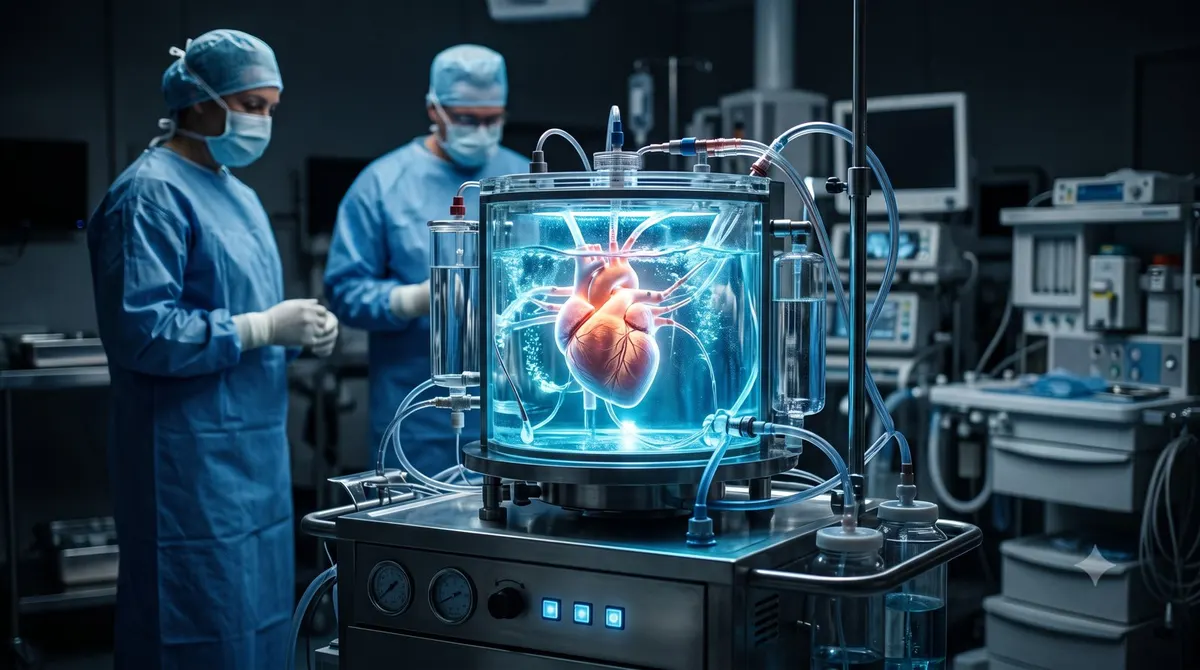
There is something almost miraculous about the idea that a heart from one person can beat inside the chest of another, keeping a stranger alive for decades. A century ago this was pure fantasy. Today, organ transplantation is routine enough that thousands of people walk around with a kidney, liver, or heart that began life in someone else’s body. Yet behind that routine lies a profound biological challenge, and a frontier so bold it once sounded like science fiction: growing our replacement organs in animals.
The Core Problem: A Body That Guards Itself
To understand why transplants are hard, you have to appreciate what a good bodyguard your immune system is. Its entire job is to distinguish self from non-self and to attack anything foreign. This is what protects you from bacteria and viruses. But it cannot tell the difference between a dangerous invader and a life-saving donated kidney. To the immune system, a new organ is simply an intruder to be destroyed.
This response is called rejection, and it is the central obstacle in all of transplantation. Your immune cells recognise foreign tissue by molecular identity tags carried on the surface of cells, a bit like a biological barcode that is unique to each person. When those tags do not match, alarms sound and the immune system mounts an assault on the transplanted organ.
Finding a Match
The first line of defence against rejection is matching. Before a transplant, doctors compare the donor and recipient across several of these identity markers, along with blood type. The closer the match, the gentler the immune reaction tends to be. This is one reason relatives are sometimes suitable donors: family members are more likely to share these molecular tags.
Matching is never perfect, though, except in the special case of identical twins, who share the same tags entirely. For everyone else, a good match reduces the conflict but does not eliminate it. Something more is needed to keep the peace between a borrowed organ and its wary new host.
Calming the Guard
That something is a group of medicines called immunosuppressants. These drugs quiet the immune system, dialling down its aggression so it tolerates the new organ. Their arrival transformed transplantation from a desperate gamble into a dependable therapy, and they are the reason transplanted organs can last for many years.
But there is a delicate balance here, a genuine trade-off. An immune system turned down low enough to accept a foreign organ is also less able to fight genuine threats. Transplant recipients are therefore more vulnerable to infections and must take these medicines carefully, usually for the rest of their lives. Managing a transplant is not a one-time operation but a lasting partnership between patient, medicine, and organ.
Not Enough Organs to Go Around
Even when the biology cooperates, there is a stubborn, heartbreaking arithmetic. The number of people who need a new organ vastly exceeds the number of organs available. Donated organs come mainly from people who have died, or from living donors who can spare one of a pair, such as a kidney. Demand outstrips this supply enormously, and many people wait years, some without ever receiving the organ they need.
This shortage is the engine driving some of the most creative research in medicine. If we cannot find enough human organs, the reasoning goes, perhaps we can find another source entirely.
The Animal Frontier
That is the idea behind xenotransplantation, the transplantation of organs from animals into humans. The concept is old, but only recently has it edged toward reality. Pigs have emerged as the most promising source, partly because several of their organs are similar in size to ours and partly because pigs can be raised specifically for the purpose.
The obstacle, of course, is rejection, and rejection across species is far fiercer than between two humans. An unmodified animal organ would be attacked almost immediately and violently. The breakthrough making xenotransplantation thinkable is genetic engineering. Scientists can now edit the genes of donor pigs, removing certain molecular tags that trigger the most explosive human immune reactions and adding human-compatible features. In effect, they are redesigning the organ’s biological barcode to look less alarming to a human body.
Early experimental procedures, transplanting gene-edited pig organs into human patients in carefully controlled situations, have shown that such organs can function inside a human body, at least for a time. This is a genuine milestone, though it remains experimental and comes with serious hurdles, including long-term rejection and the theoretical risk of transferring animal viruses.
A Careful Kind of Hope
It would be easy to get carried away, so restraint is warranted. Xenotransplantation is not yet a routine option, and many scientific and ethical questions remain unresolved. There are also profound questions about using animals in this way that societies will need to weigh thoughtfully.
Still, the trajectory is remarkable. In a single lifetime, we have gone from transplantation being impossible, to being routine between humans, to seriously pursuing organs grown in other species. At its heart, this whole story is about a beautiful negotiation: persuading a body built to reject all outsiders to accept the gift of a part from another. That we have learned to broker this peace at all is one of medicine’s quiet wonders, and the next chapter is only beginning to be written.


