 Talking Science Podcast
The Gut-Brain Connection
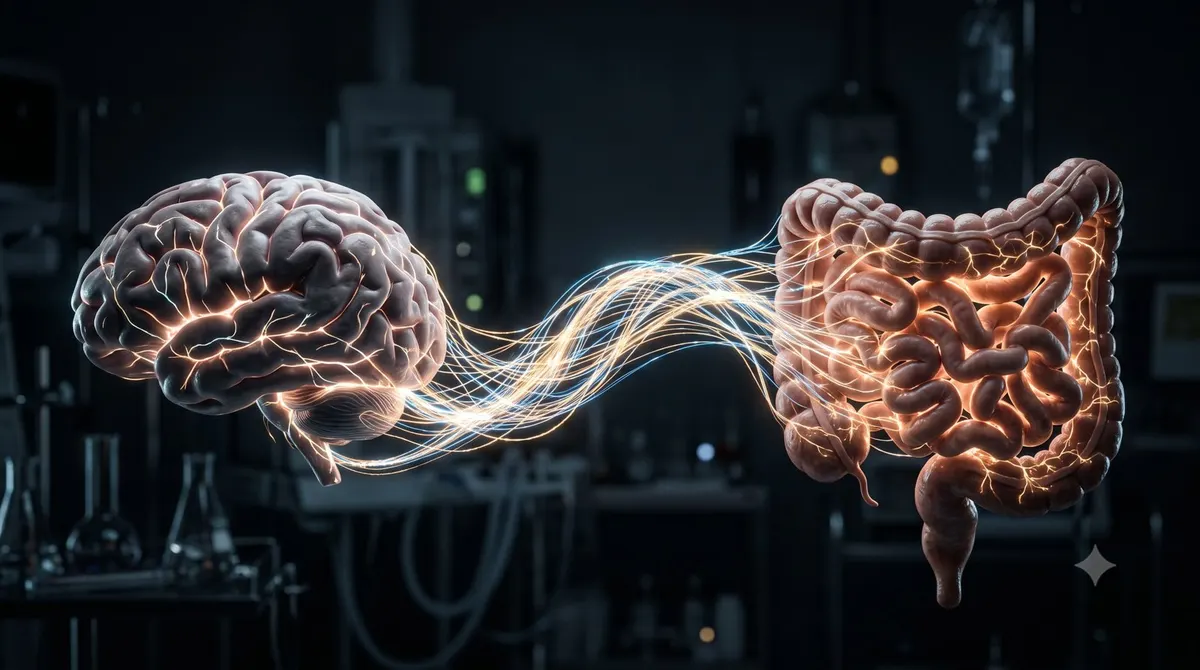
Have you ever had a decision that made your stomach clench, or felt genuine butterflies before walking on stage? We use these phrases so casually that we forget they describe something real. Your gut and your brain are not distant, unrelated organs politely ignoring each other. They are locked in constant, chattering conversation, a two-way exchange so rich that scientists have started calling the gut a kind of second brain. Understanding this link is changing how we think about digestion, mood, and even the trillions of microbes we carry.
A Brain in Your Belly
Lining the walls of your digestive tract is a vast web of nerve cells, so numerous that it rivals the number in a small animal’s brain. This network, called the enteric nervous system, is remarkable because it can operate largely on its own. It manages the muscular churning of digestion, coordinates the release of enzymes, and monitors conditions inside the gut, all without waiting for orders from the head. That is why it earned its nickname as the second brain: it is a genuine, semi-independent control centre buried in your abdomen.
But independence does not mean isolation. This gut-based network is wired directly to the brain in your skull, and messages flow busily in both directions along that connection.
The Superhighway Between Them
The main cable carrying this traffic is the vagus nerve, a long nerve that wanders from the brainstem down through the chest and into the abdomen, touching many organs along the way. It acts like a fibre-optic line between gut and brain. Here is the surprising part: far more of its signals travel upward, from gut to brain, than downward. Your digestive system is constantly reporting on its state, and your brain is listening more than it is dictating.
This helps explain some everyday experiences. When your gut is irritated or inflamed, those signals reaching the brain can register as unease or low mood. When digestion is calm and happy, the messages travelling up the vagus nerve can contribute to a general sense of wellbeing. The gut is not merely processing food; it is feeding your brain a continuous stream of information about your internal world.
The Microbes Join the Conversation
Now add a third party to the discussion: the microbiome. Your gut is home to trillions of bacteria and other microbes, a bustling internal ecosystem. Far from being freeloaders, these microbes are active participants in your biology. They help digest foods your own body cannot break down, and in doing so they produce a wide range of chemical compounds. Some of those compounds are the very same molecules your nervous system uses to send signals.
Remarkably, gut microbes are involved in producing substances related to serotonin, a chemical strongly associated with mood, much of which is actually made in the gut rather than the brain. Microbes also generate short-chain fatty acids and other molecules that can influence inflammation and communicate with the nervous system. In effect, the community of organisms living inside you has a voice in the gut-brain conversation, and its composition may subtly shape how you feel.
What This Means for Mood
All of this has sparked huge interest in whether the gut influences mental health. The honest scientific position is one of cautious excitement. Studies in animals show clear links between gut microbes and behaviour, and observational studies in people find associations between gut health and mood. But humans are complicated, and it is genuinely hard to untangle cause from effect. Does an unsettled gut worsen mood, does a stressed mind disturb the gut, or both at once? Very likely both, in a loop.
What we can say confidently is that the connection runs both ways. Psychological stress can change how the gut behaves, altering its movement, sensitivity, and even its microbial mix. And conditions of the gut can, in turn, affect how a person feels. This is why the old habit of treating the mind and the digestive system as separate departments is fading. They are parts of a single, integrated system.
Feeding the Connection
If gut and brain are in dialogue, can we influence that conversation through what we eat? The evidence points gently toward yes. Diets rich in fibre and a variety of plant foods tend to support a diverse, well-functioning microbiome, and diversity generally seems to be a good sign. Fermented foods, which contain live microbes, are of growing scientific interest, though it is wise to be modest about grand claims.
A few broad patterns have decent support:
- Plenty of fibre from varied plants gives beneficial microbes the fuel they thrive on.
- A diverse diet tends to encourage a diverse microbial community.
- Chronic stress and poor sleep can disturb the gut, so caring for the mind cares for the gut too.
None of this is a prescription or a cure, and anyone with real digestive or mood concerns should speak to a professional. But the general direction is encouraging.
One Body, One System
The gut-brain connection is a beautiful reminder that the body is not a collection of separate machines but a single, interconnected whole. The butterflies before a performance, the comfort of a good meal, the queasiness of dread, these are not metaphors laid over unrelated events. They are the felt experience of two brilliant systems talking to each other, and of the tiny lifeforms that have joined the conversation. We are, quite literally, of two minds, and they are always in touch.


