 Talking Science Podcast
The Heart – The Pump That Never Rests
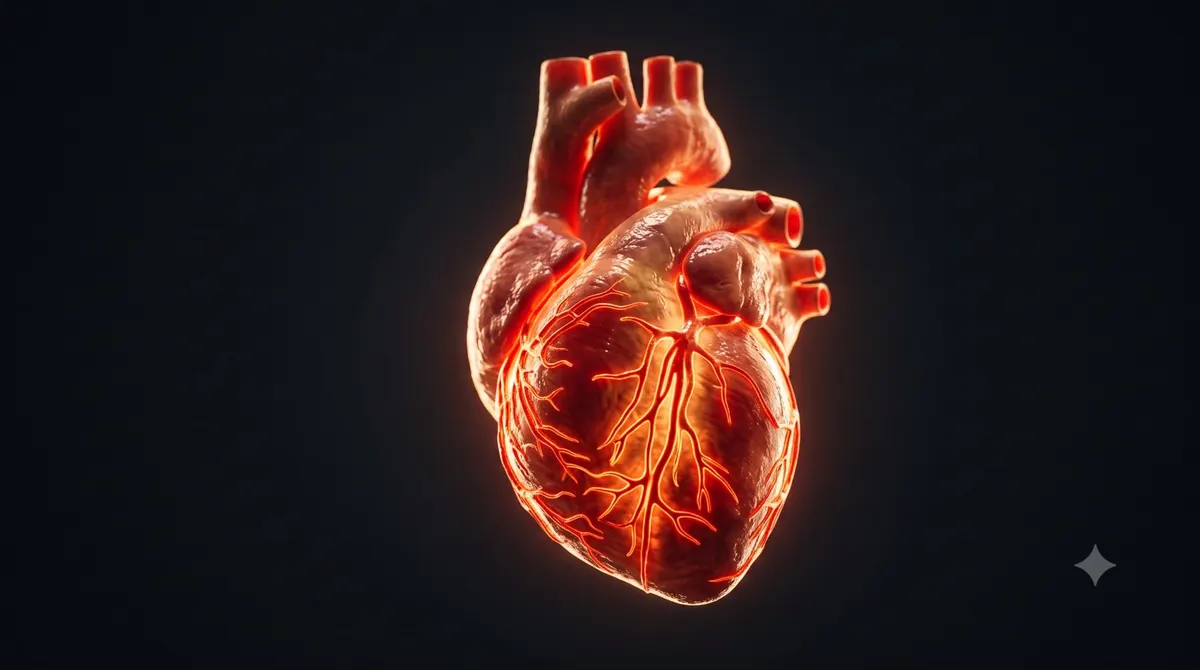
Put your hand on your chest and feel it: a steady, insistent thump that has not stopped since before you were born and will not stop until the day you die. Your heart beats roughly 100,000 times a day, every day, for a lifetime, without ever taking a break. No machine we build could run so long without maintenance. It is easy to take this faithful muscle for granted, precisely because it never asks for our attention. Let us give it some.
A Simple Job, Done Constantly
For all its fame, the heart’s job is beautifully simple: it is a pump. Its task is to push blood around your body so that every cell receives the oxygen and nutrients it needs and has its waste carried away. Blood that has delivered its oxygen returns to the heart, gets sent to the lungs to pick up a fresh load, comes back, and is pushed out to the body again. Around and around, without pause.
To manage this, the heart is divided into four chambers, working as two pumps side by side. One side sends tired blood to the lungs; the other sends the freshly oxygenated blood out to the rest of the body. A set of one-way valves keeps everything flowing in the right direction, snapping shut to prevent backflow. The familiar lub-dub of a heartbeat is the sound of those valves closing.
A Muscle Like No Other
The heart is made of muscle, but not the kind that moves your arms and legs. Heart muscle has a special quality: it never tires. The muscles you use to lift a bag or climb stairs fatigue after sustained effort, but heart muscle is built to contract rhythmically, over and over, for decades without rest. This tireless quality is one of the quiet miracles of your body.
Remarkably, the heart also generates its own beat. It does not wait for a signal from the brain. A small patch of specialized cells acts as a natural pacemaker, sending out regular electrical pulses that spread across the heart and make it contract in a coordinated squeeze. This is why a heart can keep beating on its own, and why it can be so precisely tuned by electrical signals.
The Heart Needs Feeding Too
Here is a fact people often miss: although the heart is full of blood, it cannot use that blood to feed itself. The muscle of the heart has its own dedicated supply lines, a network of vessels called the coronary arteries that wrap around it and deliver oxygen to the muscle itself. The heart, in other words, pumps blood to the whole body, including a share reserved to keep itself alive.
This detail matters enormously, because those coronary arteries are the site of some of the most serious heart problems. If one becomes blocked, the patch of heart muscle it feeds is starved of oxygen and begins to die. That is what a heart attack is: not the heart simply stopping, but part of its muscle suffocating because its blood supply has been cut off.
When the Rhythm Falters
Because the heart runs on electricity, its rhythm can go wrong. Sometimes it beats too fast, too slow, or irregularly, a condition broadly called an arrhythmia. Many arrhythmias are harmless, the occasional flutter or skipped beat that most of us feel now and then. Others are serious and need treatment, sometimes with medicines or with small implanted devices that help keep the rhythm steady.
The heart can also weaken over time, struggling to pump as forcefully as it once did. When it can no longer keep up with the body’s demands, doctors call it heart failure, a somewhat frightening name for what is often a manageable condition. The heart is resilient, and much can be done to support it when it starts to struggle.
Caring for the Pump
The encouraging news is that the heart responds well to care, and much of that care is within our reach. The same habits show up again and again: regular physical activity, which strengthens the heart like any muscle; a diet rich in vegetables, fruits, and whole foods; not smoking, which damages blood vessels; and managing stress and sleep. These are not glamorous, but their effect on heart health is real and well established.
It helps to remember that the heart is a muscle, and muscles grow stronger with use. Aerobic exercise, the kind that leaves you a little breathless, trains the heart to pump more efficiently, so it can do more work with each beat. Over time, a fit heart beats more slowly at rest, a sign of a pump working comfortably within its powers.
A Number That Tells a Story
Doctors often begin with a simple measurement: blood pressure. It captures the force your blood pushes against the walls of your vessels, and it comes as two numbers, the higher one for when the heart contracts and the lower one for when it relaxes between beats. It is a small window onto how hard the heart and vessels are working, which is why it is checked so often.
When blood pressure stays too high for a long time, it quietly strains both the heart and the vessels, raising the risk of serious trouble down the road. The tricky part is that high blood pressure usually causes no symptoms at all, which is exactly why it earns its nickname as a silent problem. This is the reasoning behind routine checks: they catch something you would otherwise never feel, at a stage when it is easiest to address.
A Debt of Gratitude
There is something humbling about the heart’s steady loyalty. It began beating before you had a face, kept time through every moment of your life so far, and will carry on through every moment to come, asking nothing but a reasonable diet and a bit of movement. It powers your first breath and your last, and every heartbeat in between is a small act of devotion you never have to think about.
So perhaps, now and then, it is worth pausing to feel that thump beneath your ribs and appreciate it. This informational tour is no substitute for medical advice, and anyone with concerns about their heart should speak with a doctor. But the everyday marvel remains: a fist-sized muscle, beating tirelessly in the dark, keeping the whole miraculous business of you going.


