 Talking Science Podcast
The Immune System – Your Body’s Standing Army
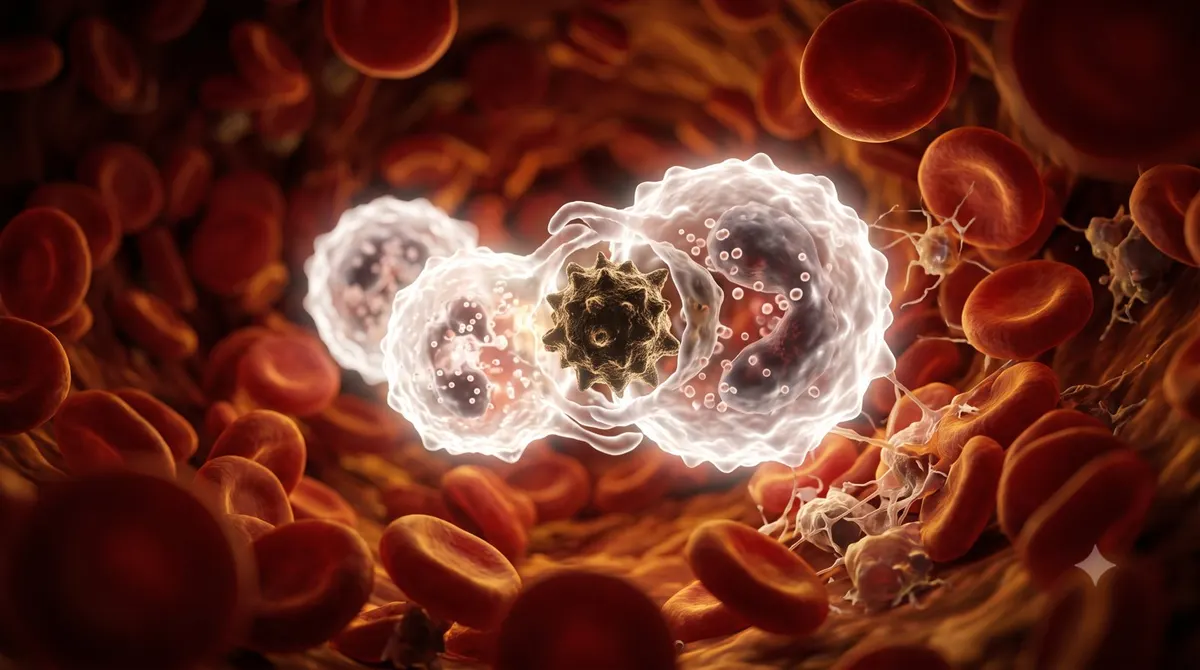
Right now, as you read this, your body is at war. Bacteria are landing on your skin, viruses are riding in on the air you breathe, and countless microbes are testing your defenses. You feel none of it, because a vast and tireless system is patrolling every corner of you, identifying threats and neutralizing them before they cause trouble. The immune system is one of biology’s great marvels, a standing army that never sleeps and, remarkably, learns from its battles.
The First Walls
The immune system’s opening move is to keep invaders out entirely. Your skin is a surprisingly effective barrier, a waterproof wall that most microbes cannot cross. Where the body has to open to the world, in the nose, mouth, and gut, other defenses take over. Mucus traps particles, stomach acid dissolves many swallowed germs, and tiny hairs sweep debris out of your airways.
These barriers are so ordinary that we forget they are defenses at all. Yet a simple cut in the skin, breaking the wall, can let in bacteria that the rest of the system then has to chase down. Most of the time, keeping the outside out is the quiet victory that prevents a fight from ever starting.
The Rapid Responders
When something does slip through, the innate immune system reacts within minutes. This is the ancient, general-purpose part of your defenses, and it does not care exactly what the invader is; it simply recognizes that something does not belong. Roaming cells called phagocytes, whose name means eaters, engulf and digest bacteria whole.
This response is what you feel as inflammation. The redness, heat, and swelling around a wound are signs of blood vessels widening and immune cells flooding to the scene. A fever works on a similar logic: raising body temperature makes life harder for many germs while speeding up your own defenses. Inflammation feels unpleasant, but it is usually the sound of your body doing its job.
The Specialists
If an infection is stubborn, the body calls in its elite forces: the adaptive immune system. This is slower to start, taking days rather than minutes, but it is precise. At its heart are white blood cells called lymphocytes, and two kinds do most of the work. B cells produce antibodies, Y-shaped molecules that lock onto a specific invader and mark it for destruction. T cells hunt down infected cells and coordinate the wider response.
What makes this system extraordinary is its specificity. Your body can generate antibodies tailored to almost any invader it might ever meet, including ones that have never existed before. It does this by shuffling genetic building blocks to create a staggering variety of detectors, so that whatever shows up, some cell somewhere can probably recognize it.
An Army With a Memory
The adaptive system’s greatest trick is memory. After it defeats an infection, it keeps a reserve of memory cells that remember the specific enemy. If that same germ returns, the response is faster and stronger, often so fast that you never feel sick at all. This is why you catch chickenpox once and are then protected for life, and it is the principle vaccines rely on.
Immune memory explains a childhood full of colds followed by relative calm in adulthood: you have simply met and filed away many common germs. It also explains why entirely new viruses can spread so widely. When no one’s immune memory recognizes a threat, everyone is starting the fight from scratch.
Telling Friend From Foe
All this destructive power raises a hard problem: how does the immune system avoid attacking your own body? The answer is a careful training process. Immune cells that would react against your own tissues are largely weeded out before they can cause harm, teaching the system to tolerate self.
When this tolerance breaks down, the results are serious. In autoimmune conditions, the body attacks its own tissues by mistake. In allergies, the system overreacts to harmless things like pollen or peanuts, treating them as dangerous invaders. These disorders reveal just how delicate the balance is between a defense that is vigorous enough to protect you and one restrained enough not to harm you.
A Well-Coordinated Force
What turns this collection of cells into a functioning army is communication. Immune cells are in constant conversation, sending chemical messages to one another to raise the alarm, call for reinforcements, and, just as importantly, sound the all-clear when a threat is beaten. These signaling molecules coordinate the whole effort, ramping the response up when danger grows and winding it down once the fight is won.
This coordination matters as much as the firepower. A response that never switches off would damage the body it is meant to protect, which is exactly what happens when the signals go awry. Much of the misery of a bad infection, in fact, comes not from the germ directly but from the body’s own vigorous reaction to it. The immune system is powerful precisely because it is disciplined, knowing not only how to attack but when to stop.
Living Well With Your Defenses
You cannot micromanage your immune system, and you should be skeptical of anything promising to boost it dramatically. What the evidence supports is less flashy: adequate sleep, regular movement, a varied diet, managing stress, and keeping up with recommended vaccinations. These do not supercharge your defenses so much as let them work as designed.
It is worth pausing to appreciate what your immune system accomplishes without ever asking for thanks. Every day it makes millions of decisions about what belongs and what does not, fights battles you never notice, and remembers enemies for decades. It is not perfect, and it can misfire, but it is one of the great reasons you are alive to read this. The next time you shrug off a cold in a couple of days, or never catch the bug going around at all, spare a thought for the silent defense that made it possible. Your body’s standing army is on duty, and it has your back.


