 Talking Science Podcast
Vaccines – How They Actually Work
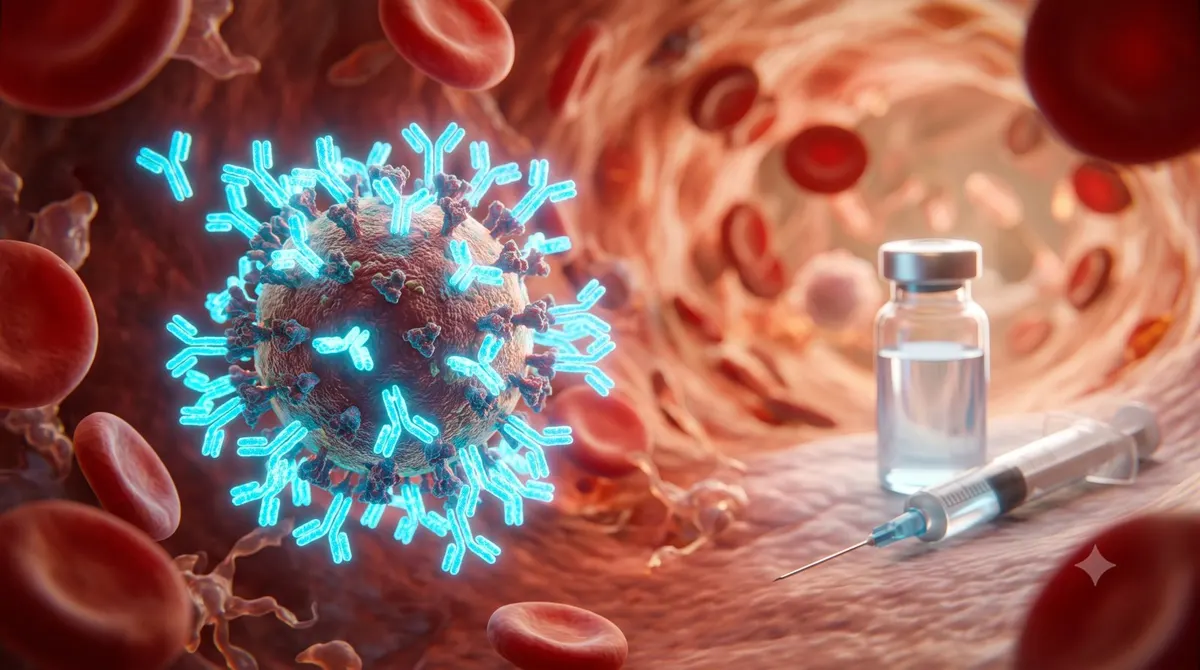
Imagine you could show your body a wanted poster of a dangerous criminal, so that if the real thing ever showed up, your defenses would recognize it instantly and take it down before it caused any harm. That is, in essence, what a vaccine does. It is one of the simplest and most powerful ideas in all of medicine, and it has saved more lives than almost any other invention. Yet how vaccines actually work remains surprisingly misunderstood, so let us walk through it plainly.
A Lesson for the Immune System
Your immune system has a remarkable ability to remember. The first time it meets a germ, it fumbles for days to build the right defenses, which is why a new infection can make you sick. But once it wins, it files away a memory of that specific enemy. If the same germ returns, the response is so fast that you often never feel ill at all. This is why you catch many diseases only once.
The catch is that gaining this memory the natural way means getting sick first, and some diseases are dangerous or deadly. A vaccine offers a shortcut. It gives your immune system the lesson without the illness, teaching it to recognize a germ before you ever meet the real thing.
Showing the Body a Harmless Preview
To learn an enemy, the immune system needs to see something that identifies it, a distinctive feature it can lock onto. Vaccines provide exactly that feature while stripping away the danger. There are several ways to do this, but the goal is always the same: present the immune system with a safe preview.
Some vaccines use a killed or weakened version of the germ, unable to cause serious disease. Others use just a single piece of the germ, such as a protein from its surface, with no ability to infect you at all. Newer vaccines deliver a set of instructions that briefly prompt your own cells to make that identifying piece, which the immune system then learns to recognize before the instructions are broken down and cleared away. In every case, no dangerous, living infection is involved.
Building the Memory
When your immune system encounters the harmless preview, it responds as if facing a real threat. It produces antibodies, the molecules that latch onto invaders, and it trains specialized cells to recognize the enemy. Crucially, it also creates long-lived memory cells that stand ready for years or even decades.
This is why you may feel mildly unwell for a day after a vaccination, perhaps with a sore arm or a low fever. That is not the disease; it is your immune system doing its training exercise, and the mild reaction is a sign the lesson is taking hold. When the real germ eventually arrives, your defenses are already prepared, and they can crush it before it makes you sick.
Protecting the Whole Village
Vaccines do something no other medicine quite manages: they protect people beyond the person who receives them. When enough people in a community are immune, a germ struggles to find anyone to infect, and its chains of transmission break down. This is called herd immunity, and it shields those who cannot be vaccinated, such as newborns, people with certain illnesses, and those whose immune systems are weakened.
This community effect is why vaccination is as much a social act as a personal one. It is also why diseases that were once common can fade almost to nothing when enough people are protected, and why they can return if vaccination rates fall. The power of a vaccine multiplies when many people share in it.
The Triumph and the Trust
The results of this idea have been staggering. Smallpox, a disease that killed and disfigured people for thousands of years, has been wiped from the face of the Earth entirely through vaccination. Polio, which once paralyzed children by the thousands, has been pushed to the brink of elimination. Diseases that were once routine parts of childhood have become rare in much of the world.
Modern vaccines are among the most rigorously tested products in medicine. Before approval they pass through carefully staged trials in large numbers of people, and their safety continues to be monitored after they are in use. Like anything in medicine they are not entirely without risk, but serious side effects are genuinely rare, and they are watched for closely.
Keeping the Lesson Fresh
Immune memory is powerful, but it is not always permanent, and this explains a few things that puzzle people. For some diseases, a single course of vaccination protects you for life. For others, the memory fades over years, which is why certain vaccines call for occasional boosters, top-up doses that remind the immune system of a lesson it is starting to forget. A booster is not a sign the first dose failed; it is simply how we keep the memory sharp.
Some germs also change over time. The influenza virus, for example, shifts its appearance from year to year, which is why a new flu vaccine is offered each season to match the versions expected to circulate. This is not a flaw in the idea of vaccination but a reflection of the moving target it faces. The principle stays the same: show the immune system what to expect, so it is ready when the real thing arrives.
A Quiet Kind of Miracle
There is something almost poetic about how vaccines work. They ask nothing more of your body than to do what it already does brilliantly, which is to learn and remember. They simply arrange for that learning to happen safely and in advance. The result is protection that feels like nothing at all, an illness that never comes, a hospital visit that never happens.
Because vaccines work by preventing disease rather than curing it, their greatest successes are invisible. We do not see the outbreaks that never occurred or the children who never got sick. But behind that quiet lies one of humanity’s proudest achievements: the ability to teach the body to defend itself, and in doing so, to protect one another. This article is informational, and questions about specific vaccines are best discussed with a healthcare professional.


