Talking Science Podcast
Venus – Earth’s Twin Gone Wrong
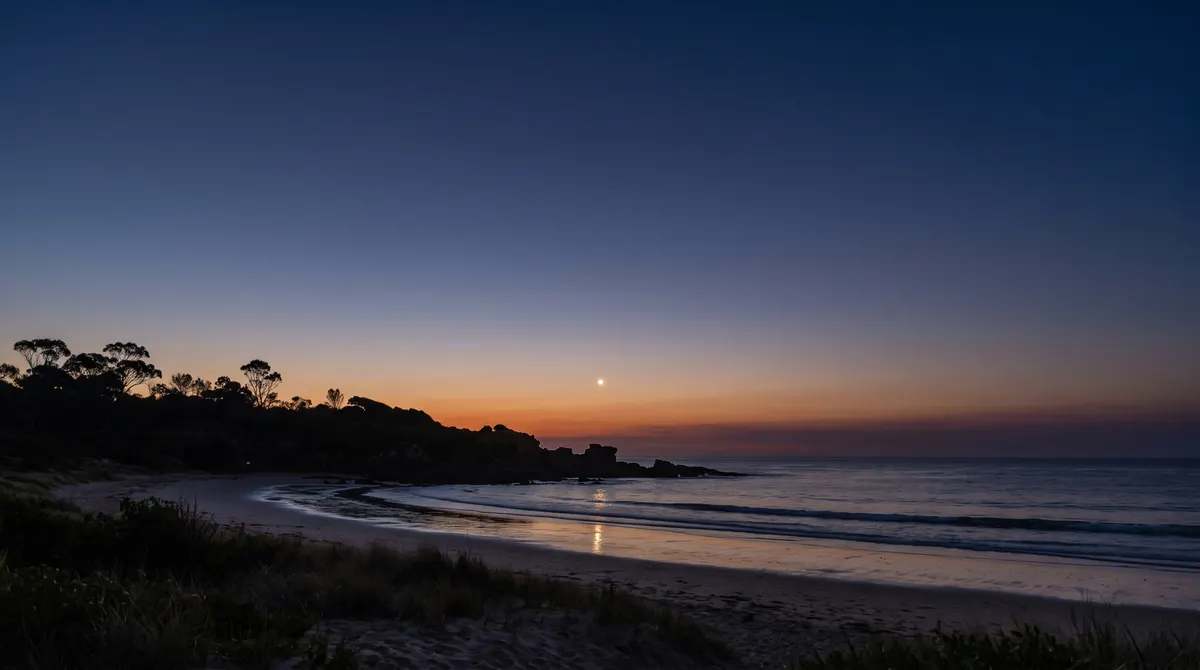
Step outside just after sunset at the right time of year and you may see it low in the western sky: a steady, brilliant point of light, brighter than any star. People have called it the evening star for thousands of years, and in other seasons it rises before dawn as the morning star. It is Venus, and after the Moon it is the brightest natural object in the night sky.
That gentle glow hides one of the most hostile places in the solar system. And the real mystery is that Venus should have been a lot like home. Understanding how it went so badly wrong is one of the most important stories in planetary science, with lessons that reach right back to Earth.
A Near-Perfect Twin
On paper, Venus and Earth are sisters. Venus is just a little smaller than our planet and has a similar mass. It is made of the same kinds of rock and metal, formed at the same time from the same cloud of material, and sits right next door as the closest planet to us. If you found a world like that around another star, you would put it near the top of the list of places worth checking for life.
Venus has a long history with Australia, too. In 1769 James Cook sailed to Tahiti to observe a transit of Venus, when the planet crossed the face of the Sun, as part of an international effort to measure the size of the solar system. After that work was done, his voyage went on to chart the east coast of Australia in 1770.
A Vision of Hell
The reality on Venus is hard to overstate. The surface temperature is around 460 degrees Celsius, hot enough to melt lead and far hotter than any kitchen oven. It is the hottest planet in the solar system, hotter even than Mercury, which sits much closer to the Sun. So distance from the Sun alone cannot explain it. Something about Venus itself traps enormous amounts of heat.
The air is crushing as well. The atmosphere is so thick that the pressure at the surface is about ninety times what we feel at sea level, similar to being close to a kilometre deep in the ocean. The beautiful creamy clouds that wrap the planet are made not of water but of sulphuric acid. A person standing there would be roasted, crushed and poisoned at once.
The planet has other oddities. It spins very slowly and backwards compared with most planets, so slowly that one rotation takes longer than its year around the Sun. When Soviet Venera probes landed on the surface in the 1970s and early 1980s, the toughest of them survived only a couple of hours before the heat and pressure destroyed them.
The Greenhouse Effect, Turned Up to Maximum
The key to Venus is the greenhouse effect. In its ordinary form it is not a bad thing at all. Certain gases, especially carbon dioxide, let sunlight through to warm the ground but trap some of the heat that would otherwise radiate back into space, a bit like a blanket. Earth has a modest, life-friendly amount of this warming. Without any greenhouse effect at all, our planet would be frozen.
Venus has the same effect at a catastrophic level. Its atmosphere is about 96 per cent carbon dioxide, and there is vastly more of it than on Earth. Heat from the Sun gets in and almost none can escape, so it builds up until the surface reaches those lead-melting temperatures. The physics of how greenhouse gases trap heat is explained in Climate Change – The Physics Behind It.
How the Runaway Happened
That raises a deeper question. Why does Venus have such a monstrous blanket of carbon dioxide while Earth does not? The leading explanation is a runaway greenhouse effect, a feedback loop in which warming drives more warming.
Venus is closer to the Sun than we are, so it started out warmer. Many scientists think it may once have had oceans of liquid water, though how much water and for how long is still debated, and new missions hope to help settle it. The idea goes like this. Being closer to the Sun, Venus was warm enough for its water to evaporate more readily. Water vapour is itself a powerful greenhouse gas, so more vapour trapped more heat, which evaporated more water, which trapped more heat still. Round and round it went until any oceans were gone.
Losing the water meant losing a crucial safety valve. On Earth, oceans and rocks steadily draw carbon dioxide out of the air and lock it away in stone over long periods, part of the carbon cycle. On a dried-out Venus there was nothing to soak up the carbon dioxide released by volcanoes over the ages, so it simply accumulated, thickening the blanket to its final, hellish extreme.
A Small Difference, A Huge Outcome
The tragedy of Venus is a feedback loop that ran away with itself. A fairly small starting difference, being somewhat closer to the Sun, appears to have been enough to tip the planet over an edge. Once the slide began, the warming fed on itself and there was no way back.
Earth, in a slightly more forgiving spot, kept its oceans and its carbon-regulating machinery and stayed temperate. Two worlds that began as near twins ended up as a garden and a furnace. It is a stark reminder that a planet's climate is not automatically stable. It can have tipping points beyond which change accelerates on its own.
A Warning, Not a Forecast
This is why Venus matters so much. It is a real example, right next door, of a greenhouse effect running out of control. It is important to be careful here. Venus is not a forecast for Earth. Nobody serious suggests human activity could turn our planet into a lead-melting copy of Venus. The circumstances are extreme and different, and Earth's oceans and carbon cycle give it protections Venus lost long ago.
What Venus does provide is a powerful proof of principle. It shows that carbon dioxide really does trap heat, that the effect can be enormous, and that a planet's climate can cross thresholds and transform. When scientists study how greenhouse gases warm our own atmosphere, Venus stands as the extreme case confirming that the basic physics is real.
The Light in the Evening Sky
So the bright evening star is far more than a pretty sight. It is a sister world showing, in the most dramatic way imaginable, how delicately balanced a habitable planet is, and how a small nudge amplified by feedback can separate a world that nurtures life from one that melts lead. Earth and Venus began as near twins. One stayed a haven and the other became a warning, written in acid clouds and red-hot air, that is well worth heeding as we learn more about the machinery of our own climate.