 Talking Science Podcast
Bushfires – Fire, Ecology and a Changing Landscape
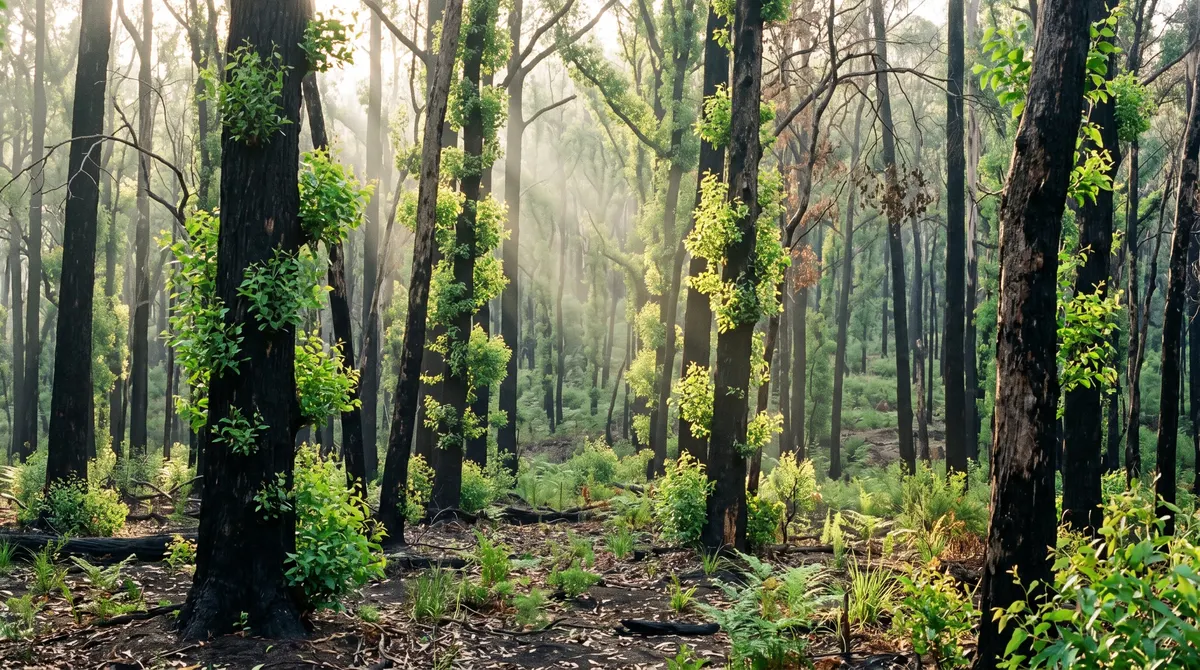
Drive through Australian bush a few months after a fire and you see something that looks almost impossible. The ground is grey with ash, the trunks of the gum trees are charred black, and yet those same trunks are covered in a fuzz of brand-new green leaves sprouting straight out of the bark. The forest that looked destroyed is already rebuilding itself.
That image captures the strange double nature of fire in Australia. It is one of the most serious natural hazards the country faces, capable of destroying homes and taking lives. It is also an ancient, natural part of how much of the continent works, and many plants are not merely tough enough to survive it but have come to rely on it. Thinking clearly about bushfires means holding both of those truths at once.
A Continent Primed to Burn
Several things combine to make large parts of Australia so fire-prone. Over much of the country the summers are hot and dry, and long dry spells cure grass, shrubs and leaf litter into ready fuel. Then there are the eucalypts, the gum trees that dominate so much of the bush. Their leaves are rich in aromatic oils that burn readily. They drop large amounts of leaves, twigs and bark, which pile up on the forest floor. And many species have loose, stringy or ribbon-like bark that catches easily and can carry flames up the trunk into the canopy, or break off and blow ahead as burning embers.
On a hot, windy day this kind of vegetation can burn with frightening speed and intensity. It can seem as if the bush were designed as kindling, and in an evolutionary sense that is not far from the truth.
Plants That Play With Fire
Over millions of years of regular fire, Australian plants evolved a remarkable set of survival strategies. Many eucalypts keep dormant buds tucked beneath their thick bark, insulated from the heat. When a fire scorches away the leaves, those buds burst into life and the tree resprouts directly from its trunk and branches. Some species also have a swollen woody base below ground, called a lignotuber, stocked with buds and food reserves so the plant can regrow even if everything above ground is killed.
Other plants take a different gamble. They may die in the fire, but the fire is what releases their next generation. Some banksias and other species hold their seeds in tough woody cones or capsules that stay sealed for years and open only after intense heat, dropping seed onto freshly cleared, ash-enriched ground where competition is low. For some species, chemicals in smoke act as a trigger that tells dormant seeds in the soil it is time to germinate.
For plants like these, fire is a signal to reproduce. That has an important consequence: keep fire out of some ecosystems for too long and certain species can actually decline, because they need a periodic burn to complete their life cycle. The relationship is not just tolerance. Whole plant communities are organised around fire.
An Old Human Partnership
Fire has also been part of human life on this continent for a very long time. Aboriginal people have used fire deliberately and skilfully for tens of thousands of years, often in frequent, cool, patchy burns that managed country, encouraged useful plants, made hunting easier and reduced fuel build-up. This practice, often called cultural burning, is the subject of growing interest and research, and many fire agencies and land managers now work with Traditional Owners to bring it back into the landscape. Exactly how these practices shaped Australian ecosystems over such long periods is still being studied, but it is clear the story of fire here is cultural as well as ecological.
Fuel, Weather and Terrain
None of this makes fire any less dangerous to people. Fire scientists often describe dangerous fire behaviour as a combination of three things: fuel, weather and terrain.
- Fuel is the vegetation available to burn. The more dry material has accumulated, the bigger and hotter a fire can become.
- Weather is often decisive on the day. High temperatures, low humidity and especially strong winds create what is known as fire weather.
- Terrain matters because fire runs much faster uphill, where the flames preheat the vegetation above them.
Wind is particularly treacherous. It feeds the fire oxygen, drives it forward and hurls burning embers well ahead of the main front, sometimes kilometres ahead, starting new spot fires that can catch people who thought they were a safe distance away. When hot, dry, windy weather meets heavy fuel on sloping ground, the result can be the most extreme fires of all. Australia's fire danger ratings exist to translate those conditions into clear public warnings.
Managing the Fuel, Honestly
Because fuel is the one ingredient people can directly influence, a major tool is hazard-reduction burning, also called prescribed burning: lighting deliberate, controlled fires in mild conditions to reduce leaf litter and undergrowth before a dangerous day arrives. It genuinely helps, but it is not a cure-all. There are limited safe windows to do it, the burns carry their own risks, the benefit fades as fuel grows back, and on the very worst days extreme fires can run through even recently treated country. Fuel management is one part of a larger picture that also includes planning, building standards, warnings, firefighting and community preparation.
How the Risk Is Shifting
This is where care with the evidence matters most. The best-established trend is that fire seasons in many parts of Australia are getting longer, and the number of days with dangerous fire weather has increased, as temperatures rise and climate patterns shift. Hotter conditions dry out the landscape more thoroughly, stretch the period when severe fires can occur and can shrink the windows for safe hazard-reduction burning.
At the same time, bushfires have always happened here, and any single season depends on many factors, including natural climate swings, rainfall in previous years and plain chance. So it would be wrong to pin any one fire on a single cause. What the science supports is a change in the underlying odds: the dice are increasingly loaded towards dangerous fire weather. Understanding the difference between a single event and a long-term trend is the same distinction explored in Weather vs Climate – Why the Difference Matters, and the underlying warming is covered in Climate Change – The Physics Behind It.
Living With Fire
Fire in Australia has two faces. It is ancient and natural, woven into the biology of the bush, and people have worked with it for tens of thousands of years. It is also a serious hazard whose most dangerous days come from the meeting of dry fuel, fierce weather and steep ground, and those days are becoming more common. Australia can never eliminate fire, and many of its ecosystems would suffer if it tried. The real task is to understand fire well enough to respect both its role in the landscape and its power to harm, and to live alongside it more wisely.


