Talking Science Podcast
Plastics and Polymers – The Miracle Material We Can't Put Down
Try counting the plastic within arm's reach. The casing of your phone, the keys on your keyboard, the buttons on your shirt, the lining of a coffee cup, the fibres in the carpet, the paint on the walls. If you have Australian cash in your wallet, the notes themselves are plastic. In a little over a century, plastic went from not existing to being one of the most abundant materials humans make.
It earned that place by being cheap, light, mouldable into almost any shape and astonishingly durable. Read that list of virtues slightly differently, though, and it becomes a description of an environmental problem. To understand both the miracle and the mess, you have to look at what plastic is made of, down at the level of molecules.
Many Parts Make a Polymer
The key word is polymer, from Greek roots meaning "many parts". A polymer is a very long molecule built by linking a great many small, identical units end to end, over and over. Picture a chain of paperclips, or a string of beads stretching on and on. Each small unit is called a monomer, meaning "one part", and when thousands of monomers bond together, you get a polymer chain.
Most plastics are built on backbones of carbon atoms, which are exceptionally good at bonding into long, stable chains, a talent explored in Carbon – The Element That Makes Life Possible. The choice of monomer, and how the chains are arranged, tangled or linked to each other, decides what you end up with. Loosely tangled chains that can slide past one another give a soft, flexible plastic like a shopping bag. Tightly packed or cross-linked chains give something hard and rigid like a bottle cap or a power socket.
Nature Got There First
Polymers are not a human invention. Cellulose, which gives wood and cotton their strength, is a natural polymer. So are the silk of a spider's web, natural rubber from the sap of rubber trees, and the proteins and DNA inside your own cells, all long chains of repeating units.
What chemists achieved, beginning in earnest in the early twentieth century, was the ability to build entirely new polymers from scratch. Bakelite, patented in 1907, is generally regarded as the first fully synthetic plastic. Most later plastics were made from chemicals derived from oil and natural gas, the ancient stores of carbon described in Fossil Fuels – Ancient Sunlight. By choosing the building blocks and controlling the chain-making, chemists could design materials to order, and the result reshaped packaging, medicine, building, transport and almost everything else.
Australia has a notable chapter in this story. In 1988 it issued the world's first polymer banknote, the product of a long research collaboration between the Reserve Bank and CSIRO. Plastic notes last much longer than paper ones and are harder to forge, and many countries have since followed.
Built to Last, Unfortunately
Why is plastic so durable? The carbon chains in common plastics are held together by strong, stable chemical bonds. Just as importantly, they are new to nature. When a leaf or a dead animal falls to the ground, bacteria and fungi move in and break it down, because over millions of years they evolved enzymes able to digest natural materials. Synthetic plastics have existed for only a few human generations, and very few microbes have the tools to make much impression on them.
So instead of rotting away over weeks or months, a discarded plastic item can persist for decades or centuries, perhaps far longer. The stability that makes plastic perfect for a water pipe or a car bumper becomes a curse once it is litter. It simply does not go away.
Smaller, Not Gone
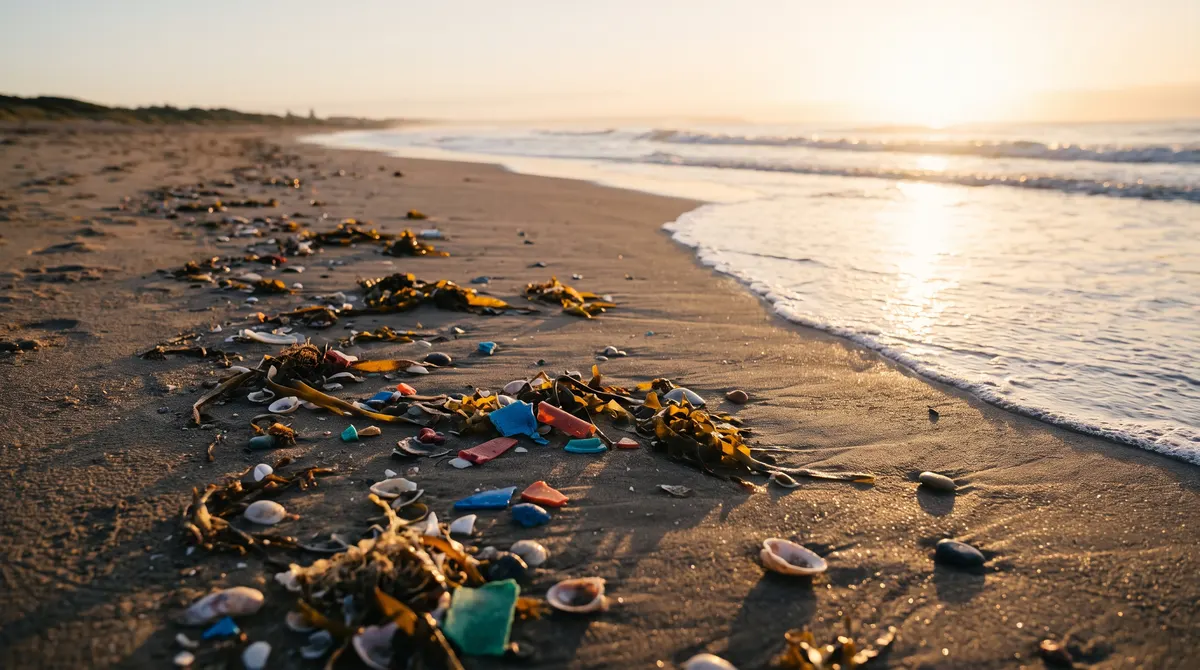
When plastic does seem to disappear, it usually has not. Sunlight, heat, waves and weathering make it brittle and break it into ever smaller pieces, until you are left with microplastics: fragments smaller than about five millimetres, down to specks too small to see. Synthetic clothing sheds tiny fibres in the wash, and car tyres shed particles as they wear.
Microplastics now turn up almost everywhere scientists look: in the deep ocean, in polar ice, in soil, in drinking water, in seabirds and fish, and in people. This is an area of intense research, and it is important to be straight about what is known. It is well established that microplastics are widespread and that we take them in through food, water and air. What that means for human health is still being worked out. It is a serious question under active study, not a settled verdict either way.
Why Recycling Is Harder Than It Looks
The obvious response is to recycle it all. Recycling is real and worthwhile, but several stubborn problems limit it:
- Sorting. There are many different kinds of plastic, and they generally cannot be melted down together without ruining the result, so they must be separated, which is fiddly and costly.
- Degradation. Each time plastic is melted and remade, its long chains tend to break and shorten, so recycled material is often lower in quality. Unlike glass or aluminium, most plastic cannot be recycled over and over indefinitely.
- Contamination and cost. Food residue, labels and mixed materials complicate the process, and new plastic made from cheap oil and gas often costs less than recycled plastic.
Commonly cited global estimates suggest less than a tenth of all plastic ever made has been recycled; much of the rest has been buried, burned or lost to the environment. Australians saw how fragile the system can be in 2022, when the national supermarket soft-plastics collection scheme was suspended after stockpiles were found that had never been recycled.
Ways Forward
The science points to a combination of approaches rather than a single fix. Using less plastic in the first place, especially single-use items, tackles the problem at its source. Designing products from fewer types of plastic, and making them easy to take apart, helps recycling actually work. Better waste collection, particularly in places where it is lacking, keeps plastic out of rivers and seas.
Researchers are also developing plastics designed to break down safely, and hunting for microbes and enzymes that can digest existing ones. In 2016 Japanese scientists described a bacterium that can break down PET, the plastic used in drink bottles, and enzymes inspired by it have since been improved in the lab. These are promising, but scaling them up remains a real challenge and is still at an early stage.
A Trade-Off We Did Not See Coming
Plastic is a story about a bargain we struck without reading the fine print. We invented a material that was cheap, tough and endlessly useful, and only later understood that "durable" cuts both ways: something that never wears out also never goes away. Seeing plastics for what they are, long and stubborn chains of repeating units, explains both how they conquered the modern world and why they are so hard to be rid of. That understanding is exactly what is needed to keep the benefits while cleaning up the afterlife.