 Talking Science Podcast
Rivers and Erosion – How Water Carves the World
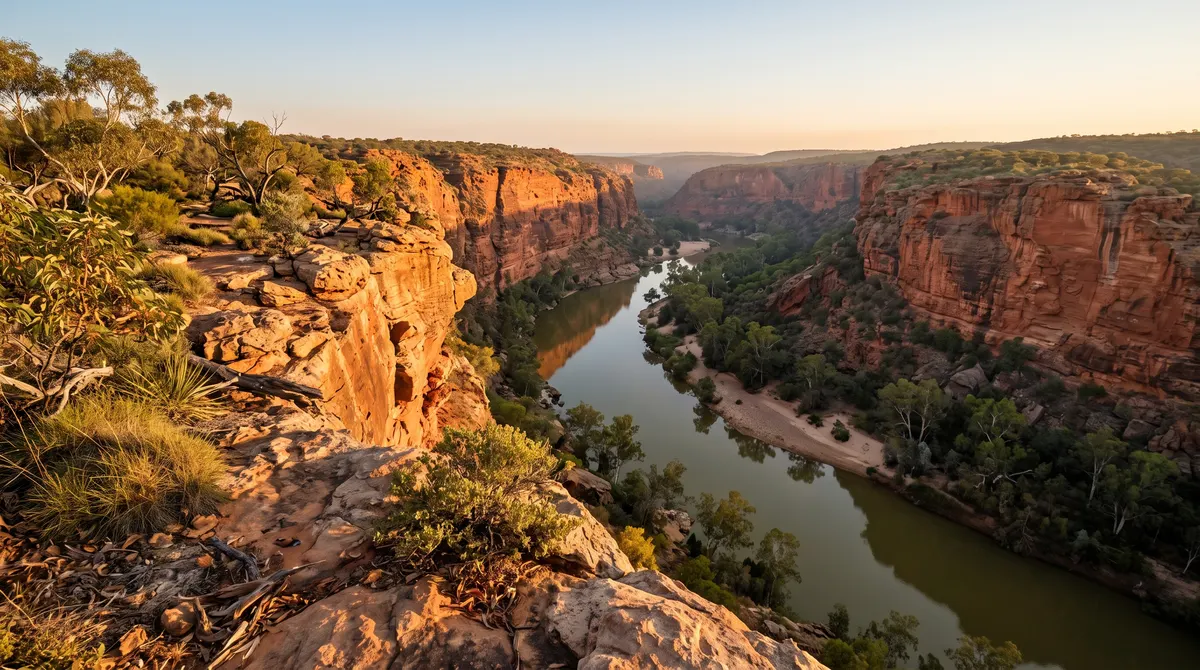
Look at the water in a river after heavy rain and it is often the colour of milky tea. That brown tinge is not dirt in the everyday sense. It is the land itself, tiny particles of rock and soil picked up somewhere upstream and now on the move. Every muddy river is carrying part of a hill, a riverbank or a mountain range, grain by grain, towards the sea.
That slow conveyor belt is one of the most powerful forces shaping the planet's surface. Stand at the rim of a great gorge and it seems impossible that a river you could paddle a canoe on could have cut something so vast. The secret is time, staggering amounts of it. Almost every valley, plain and gorge you have admired is, to a large degree, the handiwork of running water.
Born in the High Country
A river usually begins high up, in hills or mountains, fed by rain, springs or melting snow. Near the source the land is steep and the water rushes downhill with real energy. That energy is what makes a river such an effective agent of erosion, the wearing away and carrying off of rock and soil.
In these upper reaches a river mostly cuts downward. The force of the water helps, but the real cutting is done with tools: the sand, gravel and stones the river carries. Dragged and bounced along the bed, they act like grit on sandpaper, grinding away at the rock beneath. Over long spans of time this downward sawing carves steep-sided, V-shaped valleys and, where the rock and conditions are right, deep gorges. The river uses the land's own broken pieces to cut its way into the land.
Erode, Transport, Deposit
A river has three great jobs, and it does all of them along its length. It erodes material, it transports it, and eventually it deposits it. Geologists call everything a river carries its load. Large stones roll and bump along the bottom, sand hops along in short leaps, fine silt and clay ride suspended in the water, and some minerals travel fully dissolved and invisible.
How much a river can carry depends on its energy. Fast, full rivers in flood can shift boulders and move more sediment in a few days than they would in months of quiet flow. That is why so much of a river's real work happens in short, dramatic bursts rather than in the gentle conditions we usually see.
Meanders, Floodplains and Deltas
As the land flattens out, the river's character changes. Instead of cutting straight down, it begins to swing from side to side, wearing away the outside of each bend, where the water flows fastest, and dropping sediment on the inside, where it slows. Over time those bends grow into sweeping loops called meanders, and the river wanders across a broad, flat floodplain.
The floodplain is land the river itself has built. Every time the river overtops its banks, it spreads out, slows down and leaves a fresh layer of fine sediment behind. Sometimes a meander loop is cut off entirely, leaving a curved lake that Australians know as a billabong.
Near the sea, the river slows right down. A slow river loses the energy to carry its load, so it drops it, heaviest material first and finest last. Where a river meets a lake or ocean it can build a fan of new land called a delta, made entirely from the ground-down remains of distant highlands. Whether a delta forms depends on how much sediment arrives and how strongly waves and tides sweep it away, which is why some river mouths build out into the sea while others open into estuaries and lagoons.
Mountains Into Plains
Over millions of years, rivers do not just carve valleys. They help wear whole mountain ranges down. Every mountain pushed up by the slow collisions of plate tectonics is under attack from the moment it rises, and rivers are the chief carriers of the debris. Their sediment eventually settles, is buried and can harden into new rock, one loop of the endless recycling described in The Rock Cycle – How Stone Is Recycled.
Australia is a striking example of what long ages of erosion can do. It is one of the flattest and most worn-down continents, with no great collision currently building lofty peaks. The Great Dividing Range is gentle compared with the Alps or the Himalaya. The deep valleys of the Blue Mountains west of Sydney were carved by rivers cutting down into a raised sandstone plateau, and in the Northern Territory the Katherine River has cut the spectacular gorges of Nitmiluk. In Central Australia, the Finke River is often described as one of the oldest rivers in the world, though dating a river's age is genuinely difficult and such claims are best treated as estimates.
Reading a River's Story
The shape of a river can hint at its history. A river in steep, young country tends to run fast and fairly straight through a narrow valley, still busy cutting down. A river on gentle ground tends to meander in loops across a wide floodplain. Geologists learn to read a landscape this way, inferring its past from the shape of the present. These are broad tendencies rather than strict rules, though. Real rivers are shaped by the type of rock they cross, by climate, and by the uplifts and sinkings of geological history, so nature is always messier than the textbook diagram.
Why It Matters to Us
This is not just ancient scenery. The sediment rivers drop builds the rich, flat soils that feed much of the world, which is why so many farming regions and cities sit on floodplains and river valleys. But a floodplain is, by definition, where a river sometimes spreads out, so understanding erosion and deposition is central to managing flood risk. When land is cleared carelessly, erosion speeds up and rivers choke with sediment, smothering habitats and, in some places, carrying mud out to sensitive coastal waters. When rivers are dammed or walled in, their load is dropped in new places, changing the land downstream. Working with these natural processes, rather than against them, is a big part of good land and water management.
The Patient Sculptor
Next time you cross a bridge over a muddy river, look at the colour of the water and remember what it is carrying: a mountain somewhere upstream, travelling slowly to the sea. Rivers are the world's most patient artists, and given the one thing they never run short of, which is time, there is almost no landscape they cannot carve. Much of the world outside your window is something that water made.


