 Talking Science Podcast
The Kidneys – The Body's Filtration Plant
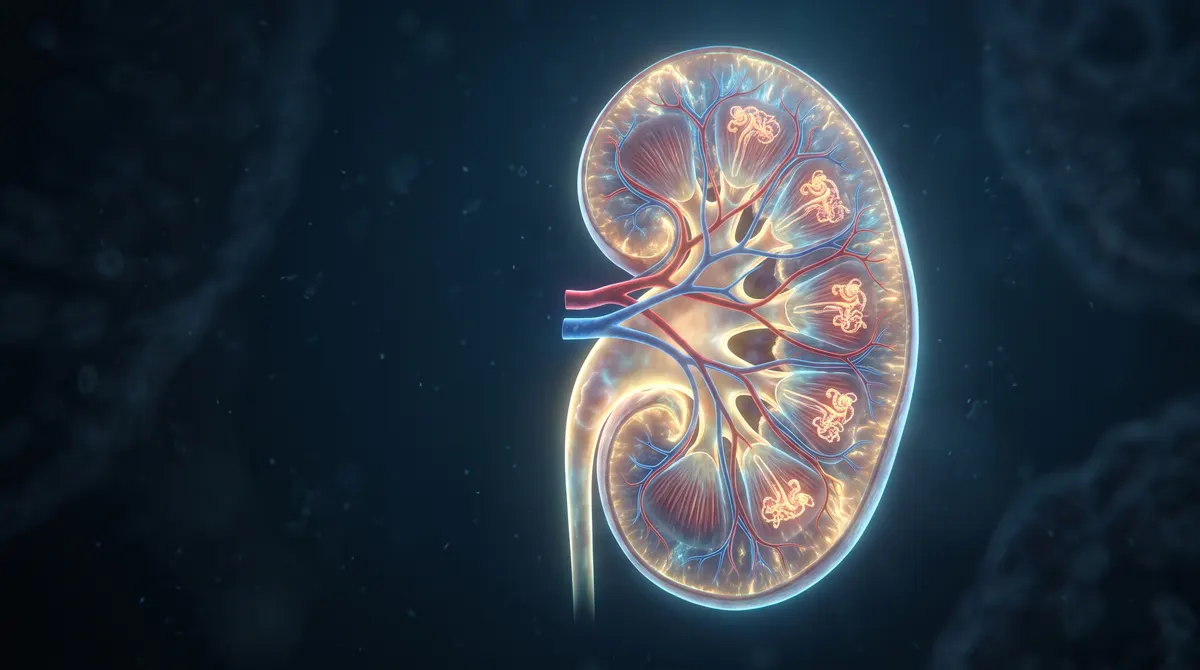
Most of us notice, without ever really thinking about it, that urine changes colour. First thing in the morning, or after a long hot day without much to drink, it is darker. After a few glasses of water, it is pale and almost clear. It seems like a trivial detail, yet that shifting shade is the visible output of one of the most sophisticated pieces of engineering in the body.
It comes from the kidneys, a pair of fist-sized organs tucked towards the back of the abdomen, just below the rib cage. Between them they filter roughly 180 litres of fluid out of the blood every day, about a large bathtub's worth, yet most people pass only one to two litres of urine. The kidney's whole secret is that two-step trick: filter out an enormous volume, then take nearly all of it back.
Inside a Nephron
The work is done by microscopic units called nephrons. Each kidney has roughly a million of them, and each is a complete little filtration and reprocessing plant working largely on its own. A nephron has two main parts: a tight tangle of tiny blood vessels called the glomerulus, and a long, winding tube called the renal tubule.
Filtration happens at the glomerulus. Blood arrives under pressure and is pushed through an extremely fine sieve formed by the vessel walls. Blood cells and large proteins are too big to pass. Water, salts, sugars and smaller wastes, including urea, made when the body breaks down protein, flow into the tubule.
This filtrate is an unsorted mix of genuine waste and things the body cannot afford to lose.
The Clever Part: Taking It Back
As filtrate travels along the tubule, the cells lining it carry out a remarkably fine sorting job called reabsorption, returning water, glucose, sodium and other useful substances to the blood. Normally almost all the glucose is reclaimed, with most of the water and salt, in amounts adjusted moment by moment.
What remains, urea and other wastes plus whatever water and salt the body has chosen not to keep, becomes urine and drains down the ureter into the bladder. Far from wasteful, the 180 litres reflects how thoroughly everything is checked.
Kidneys and Blood Pressure
This system is also the body's main tool for controlling blood pressure, which depends heavily on how much fluid is circulating, much as pressure in a garden hose depends on how much water flows through it. Hold on to more salt and water and pressure tends to rise. Let more go and it tends to fall.
The kidneys fine-tune this using hormonal signals, including one they make themselves called renin, which triggers a chain of responses adjusting blood vessel tightness and salt and water retention. The link runs both ways. Long-term high blood pressure damages the delicate vessels in each glomerulus, making it one of the leading causes of kidney disease worldwide, and damaged kidneys can push pressure higher still.
Why Urine Changes Colour
The kidneys can make urine ranging from very dilute to several times more concentrated than blood plasma. Well hydrated, they offload the surplus as plenty of pale urine. Short of water, the pituitary gland releases antidiuretic hormone, telling parts of the tubule to reabsorb more water and producing a small amount of darker urine.
The concentrating trick depends on the loop of Henle, a hairpin section of tubule dipping deep into the kidney. By shifting salt between neighbouring parts of the tubule, it builds a very salty zone that draws water back out. That is why urine colour works as a rough, everyday readout of hydration.
Two Hidden Jobs
The kidneys quietly run two more essential tasks. The first is acid balance. Ordinary metabolism constantly produces small amounts of acid, yet blood must stay within a very narrow range of acidity, or pH, for life's chemistry to work. The kidneys correct the drift by adjusting how much acid they excrete and how much bicarbonate, a natural buffer, they return to the blood.
The second surprises people: the kidneys make hormones. Erythropoietin signals the bone marrow to make more red blood cells when the blood is short of oxygen. The kidneys also perform the final step that activates vitamin D, which the body needs to absorb calcium for strong bones. That explains two often-overlooked effects of long-term kidney disease: anaemia and weakened bones. For more on red cells, see Blood – The Most Complicated Fluid You Own.
When Kidneys Fail
Chronic kidney disease is a gradual, usually irreversible loss of function over months or years, most often driven by long-term diabetes and high blood pressure, which steadily damage the glomeruli. Because the kidneys have lots of spare capacity, early stages often cause few or no symptoms, so the disease is often found through routine blood and urine tests, such as protein leaking into the urine.
Doctors track it with the glomerular filtration rate, or GFR, an estimate of how many millilitres of blood the kidneys filter each minute, worked out from a blood test along with factors such as age. A healthy young adult typically sits around 90 to well over 100. Chronic kidney disease is divided into five stages as that number falls, ending in kidney failure. Much of medicine's success here comes from patient long-term monitoring and management rather than a dramatic cure. Kidney Health Australia provides public information on the condition.
Dialysis and Transplants
When the kidneys fail, two forms of dialysis or a transplant can take over:
- Haemodialysis: blood is circulated through an external machine with a filtering membrane that removes waste and excess fluid, typically for several hours, several times a week, in a clinic or sometimes at home.
- Peritoneal dialysis: a special fluid is placed into the abdomen, where the body's own lining, the peritoneum, acts as the filter before the fluid is drained away, often managed by patients at home.
- Transplantation: a healthy kidney from a living or deceased donor is surgically connected to the recipient's blood supply and bladder.
Dialysis is life-sustaining but an ongoing substitute rather than a cure, with real demands on time, diet and daily life. A well-matched transplant can restore near-normal function, and because a person needs only one working kidney, living donation is possible. Recipients need lifelong medicines to stop their immune system attacking the new organ, and in Australia, as in most countries, demand for donor kidneys outstrips supply. More on donation is in Organ Transplants and Xenotransplantation.
Since high blood pressure and diabetes cause most chronic kidney disease, the general habits that help with those conditions support the kidneys too.
An Unglamorous Marvel
Next time you notice the colour of your urine, spare a thought for the roughly two million tiny filters behind it. Working in parallel, they have just checked your blood in molecular detail, decided what to keep and what to let go, and matched that choice to how much water you have on board. It is invisible, tireless work that keeps your inner world stable for a lifetime.


